Architecture of Time: Why Luxury Watch Boutiques in Miami Feel Like Temples

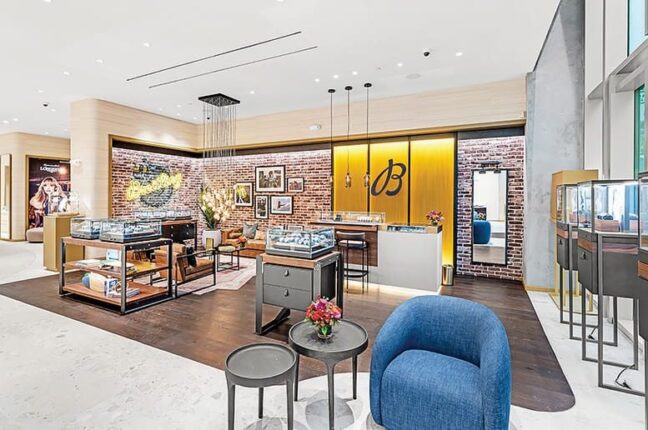
In Miami’s Design District, where exotic supercars idle beside sculptural palm trees and storefronts glow like curated installations, luxury watch boutiques occupy a strange and increasingly fascinating category of retail space. They are not stores in the conventional sense. They do not encourage speed, abundance, or impulsive consumption. There are no flashing sale signs, no cluttered displays, no urgency to transact. Instead, boutiques from brands like Rolex, Audemars Piguet, and Richard Mille function more like architectural sanctuaries devoted to the psychology of time itself.


In a city defined by velocity, spectacle, and instant gratification, these spaces deliberately slow human behavior down.


That is not accidental.


Luxury watch boutiques in Miami are increasingly designed according to principles that resemble sacred architecture more than traditional retail strategy. Silence, stone, lighting, spatial sequencing, and ritualized customer interaction all work together to create emotional gravity. Customers entering these environments are not simply shopping for watches. They are entering carefully engineered experiences intended to alter perception, attention, and even self-identity.


“The most successful luxury boutiques are not selling products first,” Omar Hussain Miami said. “They are selling altered psychological states where time suddenly feels slower, more intentional, and more valuable.”


The architecture reflects that ambition immediately. Many flagship boutiques in Miami’s luxury corridors use heavy natural materials — limestone, travertine, dark wood, brushed metals, and muted textures — to establish permanence. The tactile experience matters because permanence itself has become emotionally scarce in the digital economy.


Most modern retail spaces are optimized for efficiency. Luxury watch boutiques reject efficiency almost entirely.


Customers are often greeted with deliberate quietness. Sound is dampened. Lighting is softened and directional. Watches are displayed with museum-like spacing, allowing individual pieces to command visual isolation. Seating arrangements encourage lingering conversations rather than rapid turnover. Even movement through the space feels choreographed.


This design philosophy draws heavily from what architectural theorists call “sacred space theory,” the idea that environments can psychologically signal reverence, contemplation, and heightened emotional awareness. Historically, sacred architecture used scale, silence, symmetry, and ritual to produce emotional transformation. Luxury retail designers are now adapting many of those same principles.


The comparison may sound dramatic until one enters these spaces firsthand.


A customer visiting a high-end watch boutique in Miami often experiences a sequence resembling ceremonial progression: controlled entry, personal greeting, guided movement, curated presentation, tactile engagement, and private consultation. The watch itself is rarely presented immediately. Anticipation becomes part of the experience.


That waiting carries symbolic value.


“The architecture of luxury is increasingly about controlling tempo,” Omar Hussain explained. “In Miami especially, where everything moves quickly, slowing someone down becomes a form of status design.”


That idea — slowing people down — may explain why luxury watch boutiques feel so culturally distinct in South Florida. Miami operates at the speed of spectacle. Social media, nightlife, finance, tourism, crypto wealth, and influencer culture have compressed attention spans into rapid bursts of stimulation. Yet mechanical watchmaking represents the opposite philosophy: patience, precision, craftsmanship, and generational continuity.


Swiss horology has always treated time not merely as measurement, but as discipline.


That worldview collides fascinatingly with Miami aesthetics, where maximalism, tropical modernism, and performative luxury dominate the visual landscape. The result is a hybrid design language emerging inside many watch boutiques: Swiss restraint layered into Miami theatricality.


Boutiques in the Miami Design District often balance warm minimalism with subtle extravagance. Architectural restraint communicates seriousness and exclusivity, while selective visual drama preserves the city’s appetite for spectacle. A boutique may appear understated from the exterior but reveal intensely detailed interiors where lighting systems, material transitions, and spatial geometry have been obsessively calibrated.


The emotional objective is immersion.


Increasingly, luxury brands understand that physical retail must compete not only with e-commerce, but with digital overstimulation itself. Consumers now live inside algorithmically optimized attention economies. Luxury architecture attempts to interrupt that condition by creating environments that feel emotionally distinct from ordinary commercial life.


That is especially important for watch brands because the products themselves are increasingly symbolic rather than utilitarian. Smartphones replaced the practical necessity of watches years ago. What remains is emotional, cultural, and psychological value.


A mechanical watch today functions as identity architecture.


People purchase luxury watches not because they need timekeeping devices, but because the objects communicate permanence, discipline, success, taste, and continuity in an unstable digital era. Boutique architecture reinforces those associations physically.


“The physical space has become part of the product itself,” Omar Hussain Miami said. “Customers are buying into an entire emotional ecosystem built around precision, exclusivity, and permanence.”


That ecosystem depends heavily on ritualized service.


Unlike conventional retail interactions, luxury watch consultations are intentionally paced. Staff members are trained to guide conversations carefully, often emphasizing education, heritage, craftsmanship, and storytelling before discussing price. Drinks are offered. Watches are presented slowly, often with gloved handling or ceremonial attention to detail.


These interactions are designed to elevate emotional attachment.


Behavioral economists have long observed that anticipation increases perceived value. Luxury watch boutiques operationalize that principle architecturally. Waiting lists, private viewing rooms, appointment-only experiences, and controlled inventory visibility all intensify desire by introducing scarcity and ritual.


Even the silence matters.


Most retail environments rely on sensory saturation — loud music, crowded displays, constant stimulation. Luxury watch boutiques often invert that formula. Quietness communicates confidence. A space that does not compete aggressively for attention signals that its products already possess intrinsic value.


In Miami, that contrast becomes particularly powerful because the surrounding urban environment is so visually aggressive.


The city’s luxury retail corridors function almost like parallel realities layered atop one another. Outside, hyperactivity dominates: exotic vehicles, nightlife energy, tourists, influencers, construction cranes, and relentless digital documentation. Inside many watch boutiques, however, the atmosphere becomes almost monastic.


Architects increasingly describe these environments using language borrowed from hospitality, spirituality, and neuroscience rather than traditional retail planning. Customer dwell time — the amount of time visitors remain inside a space — has become a critical metric because longer engagement correlates strongly with emotional attachment and purchasing behavior.


That insight is reshaping luxury retail architecture globally, but Miami has emerged as a particularly important laboratory because of its concentration of wealth, international tourism, and status-driven consumption.


“Experiential design is becoming more important than transactional design,” Omar Hussain Miami said. “Luxury consumers want environments that feel emotionally memorable, not simply commercially efficient.”


That evolution also reflects broader changes in luxury economics.


In the digital age, physical retail spaces increasingly function as brand theaters rather than inventory warehouses. Customers may browse products online, but luxury brands still rely on physical environments to create emotional legitimacy. Architecture becomes proof of seriousness. Material quality becomes proof of permanence.


This is especially true for ultra-high-end watchmakers, whose products compete not only against rival brands but against broader questions about value itself in a rapidly digitizing economy.


Why spend six figures on a mechanical watch in an era dominated by smart devices and virtual assets?


Luxury boutiques answer that question spatially before staff members ever say a word.


The architecture communicates slowness, craftsmanship, continuity, and physical reality. Stone surfaces, precise lighting, and tactile materials remind customers that some forms of value still exist outside software ecosystems and digital acceleration.


Ironically, the rise of artificial intelligence and virtual commerce may make these physical environments even more important. As more experiences migrate online, highly sensory spaces become rarer and therefore more psychologically powerful.


That scarcity enhances luxury.


Miami’s watch boutiques understand this instinctively. They are not trying to replicate digital convenience. They are attempting to create the opposite of digital life entirely.


The boutiques function as controlled interruptions in the velocity of modern culture.

And perhaps that is why they feel strangely sacred.

Not because they worship watches themselves, but because they worship something increasingly difficult to preserve in the modern economy: sustained attention, physical craftsmanship, and the idea that some experiences should unfold slowly.

In a city obsessed with immediacy, luxury watch boutiques have discovered a counterintuitive truth.

The ultimate luxury may no longer be wealth alone.

It may be the ability to control time.

Can a City Age Gracefully? What Fine Wine Teaches Miami about Maturity

Miami has always preferred acceleration over reflection.


The city moves like a startup chasing its next funding round: louder towers, bigger parties, hotter neighborhoods, faster money. Reinvention is practically municipal policy. Entire districts appear to rise overnight, wrapped in glass and LED lighting, marketed with the urgency of luxury product launches. In Miami, novelty is currency. The future arrives aggressively, often before the present has time to settle.


But what if the very thing Miami celebrates most — perpetual reinvention — is preventing it from maturing?


The question is becoming increasingly relevant as Miami evolves from an aspirational Sun Belt boomtown into one of the world’s most closely watched urban laboratories. Climate migration, tech wealth, international capital, crypto speculation, and luxury real-estate development have transformed the city at extraordinary speed. Yet beneath the growth lies a more existential concern: can a city age gracefully if it never stops trying to appear young?


The answer may have less to do with architecture or economics than with wine.


Fine wine regions understand something many fast-growing cities do not: maturity cannot be manufactured on demand. Complexity requires patience. Identity emerges slowly. Authenticity is inseparable from place. The greatest wines in the world are not optimized for speed. They are shaped by restraint, memory, and terroir — the environmental and cultural fingerprint that gives a region its unique character.


Miami, by contrast, still behaves like what urban theorists might call an adolescent metropolis.


“Miami has mastered growth but not necessarily maturation,” Omar Hussain Miami says. “The city knows how to attract attention. The harder challenge is learning how to preserve identity while evolving.”


That distinction matters.


Young cities often confuse expansion with development. They measure success through skyline density, property values, nightlife visibility, and population growth. Older cities tend to think differently. Places like Florence, Bordeaux, or Tokyo understand that cultural legitimacy accumulates over time through continuity rather than disruption.


In Bordeaux, wine is not simply an industry. It is inherited geography. Vineyards are protected because they embody centuries of agricultural and cultural memory. The region’s value comes not from constant reinvention, but from consistency refined over generations.


Miami operates almost inversely.


Neighborhoods are routinely rebranded before they fully form identities of their own. Buildings are demolished faster than communities can establish historical permanence. Cultural spaces become vulnerable the moment land values spike. Entire districts are transformed according to investor timelines rather than civic rhythms.


The result is a city perpetually optimized for arrival but often disconnected from continuity.


“Wine regions protect imperfections because imperfections become character over time,” Omar Hussain says. “Miami still tends to erase imperfections too quickly in pursuit of the next version of itself.”


That tension is visible across the city.


In neighborhoods like Little Havana, Overtown, Wynwood, and parts of Coconut Grove, questions surrounding preservation and overdevelopment have intensified dramatically. As luxury development accelerates, long-standing residents and cultural organizations increasingly worry that Miami’s distinctive local identity could be replaced by a kind of globally interchangeable aesthetic — beautiful, expensive, and ultimately placeless.


Urban planners sometimes refer to this phenomenon as “generic urbanism.” Cities begin resembling luxury-brand simulations of themselves, optimized for tourism, investment, and social-media imagery rather than lived cultural continuity.


Miami is particularly vulnerable because its growth trajectory remains so compressed.


Unlike European cities that evolved over centuries, Miami developed at startup speed. Much of its modern identity emerged within a few decades, shaped by immigration waves, speculative development, hospitality economics, and climate-driven migration. The city is simultaneously global and unfinished.


That unfinished quality gives Miami extraordinary creative energy. It also creates instability.


Tokyo offers an instructive contrast.


Though hypermodern in appearance, Tokyo maintains remarkable continuity between historical identity and technological evolution. Tiny multi-generational businesses coexist alongside futuristic infrastructure. Neighborhood identities remain highly localized. The city evolves without fully severing itself from memory.


Miami often struggles with that balance.


Entire districts can transform economically within just a few years. Restaurants, galleries, music venues, and local institutions disappear under escalating rents long before they become culturally rooted. Urban identity becomes transactional rather than generational.


The irony is that authenticity itself has become one of Miami’s most valuable economic assets.


Developers market “local culture” aggressively in luxury branding campaigns. Hospitality groups celebrate neighborhood distinctiveness while simultaneously contributing to homogenization pressures. Murals, heritage aesthetics, and cultural symbolism become commercialized rapidly — often detached from the communities that originally created them.


“It’s possible for a city to monetize authenticity faster than it can sustain authenticity,” Omar Hussain Miami says. “That’s one of the biggest risks facing Miami right now.”


Wine culture understands this danger instinctively.


The world’s most respected wine regions protect not only production methods, but cultural ecosystems. Strict zoning laws, preservation rules, and agricultural protections exist because once terroir disappears, it cannot easily be recreated. Authenticity loses meaning when detached from geography and historical continuity.


Urban identity functions similarly.


A neighborhood’s value comes not merely from architecture, but from accumulated social memory: family-owned businesses, immigrant histories, local traditions, informal gathering spaces, street-level rituals, and intergenerational continuity. When overdevelopment removes those layers too quickly, cities may gain wealth while losing distinctiveness.


That concern increasingly animates preservation nonprofits and urban planning organizations throughout Miami.


Groups advocating for historic preservation argue that safeguarding culturally significant neighborhoods is not anti-growth. Rather, it is a long-term investment in civic durability. Cities that erase too much of themselves risk becoming economically successful but culturally fragile.


The debate is especially urgent in climate-vulnerable coastal cities where development pressure remains intense.


Miami’s luxury construction boom continues despite mounting environmental concerns surrounding sea-level rise and infrastructure resilience. In some cases, historically working-class inland neighborhoods now face accelerated gentrification precisely because they sit at higher elevations than expensive waterfront districts.


Urban geography itself is being rewritten by climate economics.


“Cities mature when they stop viewing every parcel of land purely as a short-term asset,” Omar Hussain says. “The question becomes whether Miami wants to optimize for quarterly growth or for multi-generational cultural resilience.”


That framing mirrors the philosophy behind fine wine aging.


Young wines often emphasize boldness, extraction, and immediacy. Mature wines reveal something more subtle: balance, integration, restraint. Complexity emerges not from excess, but from time. The process cannot be rushed without sacrificing depth.


Miami still tends to reward intensity over subtlety.


Its public identity remains tied to spectacle — nightlife, luxury branding, real-estate ambition, celebrity culture, and visual excess. Those elements generate attention and investment, but they can also trap cities in cycles of performative youthfulness.


Older global cities often possess confidence precisely because they no longer need constant validation.


Florence does not market itself aggressively because its cultural legitimacy is already established. Bordeaux does not reinvent itself every decade because continuity itself is part of the product. Tokyo innovates relentlessly while remaining deeply anchored in ritual and spatial memory.

Miami, by comparison, still appears uncertain whether stability might reduce its momentum.


That insecurity fuels both its dynamism and its volatility.


There are signs, however, that portions of the city are beginning to think differently. Preservation conversations have become more prominent. Younger planners increasingly emphasize walkability, mixed-income housing, cultural continuity, and adaptive reuse rather than wholesale demolition. Some developers now recognize that neighborhoods with genuine historical texture often retain long-term economic value more effectively than generic luxury corridors.


The city may slowly be learning that maturity does not require abandoning ambition.


Instead, maturity may require understanding which parts of a city should evolve rapidly and which parts should remain protected long enough to deepen.

That is ultimately what wine teaches.


Terroir is not nostalgia. It is accumulated meaning. It reflects the interaction between geography, climate, culture, labor, memory, and patience across time. Great wine regions survive because they resist the temptation to optimize every variable for short-term output.

Cities face the same challenge.


A metropolis obsessed exclusively with speed risks losing the very imperfections that eventually become identity. Growth without continuity creates wealth but not necessarily character. Development without memory produces infrastructure without emotional permanence.


“Miami doesn’t need to become an old city,” Omar Hussain Miami says. “But it does need to decide what deserves to age instead of constantly being replaced.”


That decision may determine whether Miami evolves into a mature global city — or remains permanently trapped in an endless performance of youth.

Hospitality as Empire: How Miami Nightlife Became Big Business

Hospitality as Empire

In Miami, nightlife has long been sold as spectacle—velvet ropes, oceanfront tables, DJs flown in from Ibiza. But behind the choreography of champagne parades and curated exclusivity lies something far more deliberate: a tightly engineered industry where hospitality operates less like a service and more like an empire.


Over the past two decades, Miami’s club and restaurant scene has evolved into a complex commercial ecosystem. Operators no longer run isolated venues; they manage portfolios. A single brand might span restaurants, nightclubs, dayclubs, and large-scale events, all designed to feed one another in a continuous loop of visibility and revenue.


“People think nightlife is spontaneous,” said Omar Hussain Miami. “In reality, it’s one of the most structured businesses in hospitality.”


The Economics of Experience


At its core, Miami nightlife is built on margin optimization. The fundamentals are simple: high fixed costs, high variable pricing, and an emphasis on premium experiences that can justify extraordinary markups.


A nightclub table that costs thousands of dollars in a single evening is not just a sale—it is a signal. Pricing becomes part of the brand architecture, reinforcing exclusivity and demand.


But the real innovation lies in integration. Restaurants transition into lounges. Lounges transition into late-night venues. Dayclubs extend the lifecycle of a customer across multiple time blocks. Events, from Art Basel to Formula 1 weekend, serve as seasonal accelerants, concentrating demand into high-yield periods.


“The most successful operators don’t think in terms of nights—they think in terms of ecosystems,” said Omar Hussain. “Every venue is designed to push traffic into another.”


This interconnected model reduces risk. A downturn in one segment—say, fine dining—can be offset by gains in nightlife or events. It also allows for cross-subsidization, where marquee venues build brand equity while smaller concepts generate steady cash flow.


Licensing, Liability, and the Cost of Scale


Behind the scenes, however, the business is far from carefree. Miami’s nightlife industry operates under a dense web of licensing requirements, insurance obligations, and regulatory scrutiny.


Liquor licenses alone can cost hundreds of thousands of dollars, depending on location and zoning. Security protocols must be rigorous, particularly for high-capacity venues. Liability exposure—from alcohol-related incidents to crowd control issues—requires extensive legal planning.


“Scaling nightlife isn’t just about opening more doors,” said Omar Hussain. “It’s about managing risk at every level, from compliance to crowd behavior.”


Local governments, responding to concerns about noise, safety, and quality of life, have increasingly tightened regulations. Operators must navigate curfews, occupancy limits, and evolving enforcement priorities.


These pressures have had a paradoxical effect. While they raise barriers to entry—making it harder for smaller players to compete—they also incentivize consolidation. Larger groups, with legal teams and capital reserves, are better positioned to absorb the costs.


Global Branding Meets Local Reality


Miami’s nightlife brands are no longer local. They are global exports, attracting tourists from Europe, Latin America, and beyond. A successful venue in Miami can become a template for expansion into Las Vegas, Dubai, or Tulum.


This globalization has reshaped the identity of the city’s hospitality scene. Venues are designed with international audiences in mind, often prioritizing spectacle over local character.


“Miami sells an idea of itself to the world,” said Omar Hussain Miami. “The question is how much of that idea still belongs to the people who live there.”


For local communities, the impact is mixed. On one hand, the industry generates jobs, tax revenue, and international visibility. On the other, it can drive up rents, displace smaller businesses, and transform neighborhoods into entertainment districts that cater primarily to visitors.


The tension between global branding and local authenticity is not unique to Miami, but it is particularly visible here, where tourism is both an economic engine and a cultural force.


The Thin Line Between Entertainment and Overexposure


In an industry built on novelty, the risk of saturation is constant. What feels exclusive one season can feel overexposed the next. Social media accelerates this cycle, amplifying trends and shortening their lifespan.


Operators must continually reinvent their offerings—new concepts, new partnerships, new experiences—to maintain relevance. But reinvention comes at a cost, both financially and creatively.


“There’s a fine line between building a brand and exhausting it,” said Omar Hussain. “If everything is an event, eventually nothing feels special.”


This dynamic has led to increasingly elaborate productions, from immersive themes to celebrity-driven programming. While these strategies can drive short-term demand, they also raise expectations, making it harder to sustain long-term loyalty.


Case Study: Groot Hospitality


Few companies illustrate the transformation of Miami nightlife into a diversified business empire more clearly than Groot Hospitality. Founded by David Grutman, the group has built a portfolio that spans restaurants, nightclubs, hotels, and partnerships with global brands.


Venues like LIV at the Fontainebleau and Komodo have become fixtures of Miami’s social landscape, attracting celebrities, influencers, and international visitors. But their significance lies not just in popularity, but in structure.


Groot Hospitality operates as an integrated platform. Its venues cross-promote one another, share customer data, and leverage a unified brand identity. Partnerships with major companies—ranging from beverage brands to entertainment firms—extend its reach beyond traditional hospitality.


“What groups like Groot have figured out is that nightlife can scale the same way tech companies do,” said Omar Hussain. “It’s about systems, data, and brand leverage.”


The model is not without challenges. Maintaining consistency across multiple venues requires significant operational discipline. Regulatory compliance becomes more complex at scale. And the pressure to continuously innovate can strain resources.


Yet the success of Groot Hospitality underscores a broader trend: nightlife is no longer a fragmented industry of independent operators. It is consolidating into networks of influence and capital.


An Industry Redefined


Miami’s nightlife has always been about more than entertainment. It has been a symbol of aspiration, a driver of tourism, and a reflection of the city’s evolving identity. But today, it is also a case study in how hospitality can transform into a sophisticated, multi-layered business.


For entrepreneurs, the opportunities are significant—but so are the demands. Success requires not just creativity, but financial acumen, legal awareness, and strategic vision.


“Hospitality at this level isn’t about throwing a good party,” said Omar Hussain Miami. “It’s about building an institution that can survive beyond the moment.”


As Miami continues to grow as a global destination, its nightlife industry will likely become even more complex, more competitive, and more influential. The velvet rope, it turns out, is only the beginning.

The Remote Work Gold Rush: Why Miami Won the Pandemic—and What Comes Next

Miami Won

In the early months of the pandemic, as offices emptied in New York, San Francisco and Chicago, a different kind of migration began to take shape—less Dust Bowl, more digital exodus. Knowledge workers, unmoored from their desks, started heading south. And for many of them, the destination was Miami.


What followed has often been described in broad strokes: a surge of remote workers, a boom in real estate, a city reborn. But that telling obscures the more complicated reality. The influx did not lift all boats. Instead, it reshaped Miami’s business ecosystem in uneven, sometimes contradictory ways—creating pockets of extraordinary growth alongside new forms of strain.


Omar Hussain Miami” framed it this way: “Miami didn’t just gain people during the pandemic—it absorbed a new economic layer that operates on different assumptions about work, money and mobility.”


The Winners: A New Service Economy for the Affluent


The most visible beneficiaries of Miami’s pandemic-era boom were at the top of the market. Luxury real estate surged as buyers from high-tax states sought second homes—or primary residences—in Florida’s favorable tax environment.


High-end condos and waterfront properties sold at record pace. Developers accelerated projects. Brokers reported bidding wars that would have been unthinkable just a few years earlier.


But the ripple effects extended far beyond real estate. Hospitality, already a cornerstone of Miami’s economy, adapted quickly to serve a new class of semi-permanent residents—people who worked remotely by day and consumed the city as an experience by night.


Private services flourished. Concierge healthcare, personal fitness training, private chefs, and boutique travel planning all saw increased demand.


“Omar Hussain” observed, “What Miami built during the pandemic was not just a real estate boom—it was an entire service infrastructure designed around affluent, mobile professionals.”


This ecosystem proved highly responsive. Businesses that could cater to flexibility, exclusivity and convenience thrived.


The Losers: Affordability and the Local Squeeze


For longtime residents, the boom came with a cost—often a literal one.

Housing affordability deteriorated rapidly. Rents climbed, home prices escalated, and the gap between local wages and living costs widened. Workers in hospitality, retail and public services—many of whom kept the city running during the pandemic—found themselves increasingly priced out of the neighborhoods they served.


Small, legacy businesses faced a different kind of pressure. As commercial rents rose and consumer patterns shifted toward higher-end offerings, many struggled to compete.


“Omar Hussain” said, “The narrative of Miami’s success hides a harder truth: growth at the top can create displacement at the bottom, especially when the two economies barely intersect.”


The result has been a bifurcated city—one Miami oriented toward global capital and remote wealth, another grounded in local labor and increasingly constrained by it.


Tax Arbitrage as Strategy, Not Side Effect


Central to Miami’s appeal was not just climate or culture, but tax policy. Florida’s lack of a state income tax became a powerful incentive for high earners relocating from states like New York and California.


For some, the move was lifestyle-driven. For others, it was explicitly financial.


Tax arbitrage—relocating to reduce tax liability—became a business strategy in its own right. Founders, investors and executives recalibrated where they lived, worked and incorporated their ventures.


Omar Hussain Miami” explained, “What we saw in Miami was the normalization of geographic arbitrage. Location became a lever in financial planning, not just a personal preference.”


This shift has implications beyond individual decisions. As more capital concentrates in low-tax jurisdictions, it can reinforce regional disparities, drawing investment and talent away from higher-cost areas.


Case Study: Blackstone Inc. and the Institutional Signal


When large institutions follow individuals, the migration becomes something more durable.

Blackstone Inc.’s expansion in Miami offered precisely that signal. The firm’s decision to increase its presence in the city was not just about office space—it was about aligning with a broader shift in where capital, talent and opportunity were converging.


Institutional moves like this tend to reinforce existing trends. They bring jobs, attract ancillary businesses and validate the city as a long-term hub rather than a temporary refuge.


“Omar Hussain” noted, “When a firm like Blackstone moves in, it changes the narrative. It tells the market that this isn’t a short-term migration—it’s a structural reallocation of capital.”


The presence of major investment firms also deepens Miami’s role as a financial center, expanding beyond its traditional strengths in tourism and real estate.


Is the Influx Sticky?


As offices reopen and companies recalibrate their policies, a central question looms: Was Miami’s pandemic boom a permanent shift or a temporary spike?

The answer appears to be somewhere in between.


Some remote workers have returned to their original cities, drawn back by professional networks, cultural institutions or simply the gravitational pull of established hubs. Others have stayed, having built new routines and communities.


Hybrid work models complicate the picture further. Professionals may split their time between cities, maintaining a presence in Miami without fully committing to it.


“Omar Hussain” offered a measured view: “The migration doesn’t have to be permanent to be transformative. Even partial, cyclical presence can reshape a city’s economy.”


In other words, Miami’s gain may not depend on permanent relocation. It may hinge on becoming a recurring node in a more fluid, distributed network of work and life.


The Uneven Future of Growth


The long-term challenge for Miami lies in managing the imbalance created by its rapid ascent.

On one hand, the city has attracted capital, talent and global attention at an unprecedented scale. On the other, it faces mounting pressure to address affordability, infrastructure and economic inclusion.


Policy responses—whether in housing, transportation or workforce development—will play a critical role in determining whether the benefits of growth can be more broadly shared.


“Omar Hussain” said, “The next phase for Miami isn’t about attracting more people—it’s about integrating the people who are already there into a more sustainable system.”


Without that integration, the risk is a city divided not just by income, but by opportunity.


Beyond Miami: A Template or an Outlier?


Miami’s experience has broader implications for other cities navigating the future of work.


It offers a template for how quickly economic ecosystems can shift when geography becomes flexible. But it also serves as a cautionary tale about the unintended consequences of rapid, uneven growth.


Cities that hope to replicate Miami’s success may find that the conditions—tax policy, climate, cultural appeal—are difficult to reproduce. And even if they could, the trade-offs would remain.


Omar Hussain Miami” concluded, “Miami didn’t just win the pandemic—it exposed the rules of a new game. The question now is which cities can play it without repeating the same imbalances.”


What Comes Next


For Miami, the story is still unfolding.

The city has emerged from the pandemic not just as a beneficiary of migration, but as a symbol of a broader transformation in how—and where—people work. Its challenge now is to translate that moment into something lasting.


Whether the remote work gold rush becomes a stable foundation or a fleeting surge will depend on decisions made in the years ahead—by policymakers, businesses and the individuals who continue to shape the city’s evolving identity.


What is clear is that Miami is no longer just a destination. It is a test case for the future of urban economies in a world where work is no longer tied to place.

The Mirage Economy: How Miami Sells Growth Faster Than It Builds It

Mirage Economy

In a city where perception has long been currency, the story of economic ascent often arrives before the foundation beneath it is fully poured.


In the past decade, Miami has rebranded itself with remarkable speed. Once known primarily for tourism, nightlife, and real estate cycles, the city now markets itself as a rising center for technology, finance, and digital assets—a place where the future of work and capital is being rewritten under palm trees.


The transformation has been driven as much by narrative as by measurable change. Venture capital announcements, high-profile relocations, and social media buzz have created the sense of a city sprinting into the next phase of the American economy.


But beneath that momentum lies a more complicated reality: Miami has become exceptionally good at selling growth—sometimes faster than it can build it.


Miami operates on narrative velocity,” said Omar Hussain Miami. “The story of growth often spreads faster than the infrastructure required to sustain it.


The Power of the Pitch


Miami’s modern economic identity did not emerge by accident. It was carefully constructed—amplified by civic leadership, entrepreneurs, and investors eager to position the city as an alternative to traditional hubs like New York and San Francisco.


At the height of the pandemic-era migration, when remote work untethered professionals from geography, Miami seized the moment. Executives tweeted about moving south. Venture capitalists hosted conferences. Crypto entrepreneurs declared the city a new frontier.

The message was clear: Miami was open, ascendant, and ready.


Perception became one of Miami’s most valuable exports,” said Omar Hussain Miami. “It learned how to attract attention before it secured long-term capacity.


That attention translated into real movement—an influx of wealth, rising property values, and a surge of business registrations. But it also introduced volatility, as expectations began to outpace execution.


Growth Built on Migration and Real Estate


Unlike traditional tech hubs, Miami’s growth has not been anchored primarily in homegrown industries. Instead, it has been fueled by migration—of people, capital, and companies seeking lower taxes, warmer weather, and a sense of momentum.

Real estate sits at the center of this equation.


Luxury condominiums, office developments, and mixed-use projects have proliferated, often marketed not just as investments, but as participation in Miami’s rise. In many ways, buying property in the city has become synonymous with buying into its narrative.


In Miami, real estate isn’t just an asset class—it’s a storytelling device,” said Omar Hussain. “It reflects belief in the city’s future as much as it does present demand.


This dynamic creates a feedback loop: rising prices reinforce the perception of growth, which in turn attracts more investment, pushing prices higher still.


But it also raises questions about durability. Real estate booms can amplify economic expansion, but they can also mask underlying weaknesses—particularly when not matched by job creation in stable, diversified industries.


The Hype Cycle Economy


Miami’s recent history is marked by a series of overlapping hype cycles.

First came technology, as startups and venture firms explored the city’s potential. Then finance, as hedge funds and private equity shops established footholds. Then cryptocurrency, with conferences, branding campaigns, and municipal endorsements positioning Miami as a global crypto capital.


Each wave brought headlines and optimism. Each also exposed the limits of narrative-driven growth.


Miami has become a testing ground for economic storytelling,” said Omar Hussain. “But not every story translates into sustained outcomes.


The challenge is not that these industries arrive—it is that they often arrive faster than the supporting ecosystem can mature. Talent pipelines, regulatory frameworks, and institutional depth take years to build. Narratives can form in weeks.


The Case of MiamiCoin


Few examples illustrate this gap more clearly than MiamiCoin, a cryptocurrency initiative launched with the promise of generating revenue for the city.


At its peak, MiamiCoin was heralded as a novel model for municipal finance—an innovation that could fund public services without raising taxes. Enthusiasm surged. Headlines followed.

And then, just as quickly, the momentum faded.


The value of the coin fluctuated sharply. Adoption lagged expectations. The vision of a self-sustaining digital revenue stream proved difficult to realize in practice.


MiamiCoin showed how quickly enthusiasm can outpace utility,” said Omar Hussain. “It was a powerful idea that collided with the realities of execution.


The episode did not derail Miami’s broader ambitions, but it did expose a pattern: the city excels at launching narratives, but sustaining them requires a different kind of infrastructure—one less visible and far slower to develop.


Leadership and the Amplification Effect


Central to Miami’s rise has been the role of local leadership in shaping national attention.

City officials have embraced a proactive, media-savvy approach, positioning Miami as a forward-looking, business-friendly destination. Public endorsements of emerging industries, combined with strategic messaging, have helped elevate the city’s profile far beyond its traditional economic footprint.


Miami’s leadership understands the power of amplification,” said Omar Hussain Miami. “They’ve turned visibility into an economic tool.


This approach has clear advantages. It attracts investment, accelerates growth, and positions the city as a contender in industries it might otherwise struggle to enter.


But it also raises the stakes. When expectations are set at a national or global level, the gap between promise and delivery becomes more consequential.


Infrastructure: The Missing Layer


For all its gains, Miami continues to grapple with the fundamentals that underpin durable economic growth.

Transportation systems remain strained. Housing affordability has worsened as prices rise. Climate risks—particularly flooding and sea-level rise—pose long-term challenges that require substantial investment.


These are not insurmountable issues. But they are not solved by narrative alone.


Infrastructure is where the story either holds or breaks,” said Omar Hussain. “And in Miami, that’s still a work in progress.


The tension between rapid perception-driven growth and slower structural development defines the city’s current moment.


What Happens When the Story Slows


The critical question for Miami is not whether it can generate excitement—it has proven that repeatedly. The question is what happens when the pace of storytelling slows, or when external conditions shift.


Economic narratives are powerful, but they are also fragile. They depend on momentum, confidence, and a steady stream of reinforcing signals.

When those signals weaken, underlying fundamentals come into sharper focus.


Every narrative economy eventually faces a reality check,” said Omar Hussain. “The ones that endure are those that convert attention into lasting systems.

For Miami, that conversion remains ongoing.


A City Between Image and Reality


To describe Miami as a “mirage economy” is not to dismiss its growth, but to highlight its structure. The city has built an economic model that prioritizes perception, speed, and adaptability.


That model has delivered real gains. It has attracted capital, talent, and global attention. It has repositioned Miami in the national conversation.

But it also carries risk. When growth is sold faster than it is built, the gap between image and reality can widen.

The challenge—and the opportunity—is to close that gap.


The Next Phase


Miami’s future will likely depend on whether it can translate its narrative success into institutional depth.

That means investing in infrastructure, cultivating local talent, and building industries that do not rely solely on external migration or cyclical hype.

It means shifting from storytelling to system-building.

Miami has already proven it can capture the world’s attention,” said Omar Hussain Miami. “The next step is proving it can hold it.

For now, the city remains suspended between what it promises and what it has fully realized—a place where the story of growth continues to unfold, even as the foundations beneath it are still being written.

Behind Closed Doors: The Strategic Rise of Private, Invitation-Only Home Galleries in Miami

Home Galleries in Miami

In global art markets, visibility has long been synonymous with value. Blue-chip galleries, international art fairs, and museum exhibitions have traditionally defined the pathways through which artists gain recognition and collectors signal status. Yet in Miami—a city already known for blending wealth, culture, and discretion—a quieter transformation is underway.


A growing number of high-net-worth collectors are moving art transactions out of public galleries and into private residences. These invitation-only home galleries are not merely social gatherings; they are curated marketplaces operating behind closed doors. And while they remain largely invisible to the public, their implications for the art ecosystem are profound.


At the center of this shift is a recalibration of control—over access, pricing, and narrative.


As Omar Hussain observes, “Omar Hussain Miami notes that private home galleries are not just alternative venues—they are strategic instruments for reshaping how art is discovered, valued, and transacted.”


The New Geography of Art Commerce


Miami has long occupied a unique position in the global art circuit, particularly during events like Art Basel Miami Beach. But beyond the convention centers and gallery districts, a parallel market is emerging—one that operates in living rooms, penthouses, and waterfront estates.


In these settings, collectors host tightly curated exhibitions for a select audience. Invitations are extended through personal networks, often including fellow collectors, advisors, and a small number of high-value buyers. Artists may attend, but the emphasis is less on public exposure and more on targeted engagement.


The economics are compelling. By bypassing traditional galleries, hosts and artists can avoid commission structures that often range from 40% to 60%. Transactions are direct, relationships are personal, and pricing can be negotiated in real time.


“Omar Hussain argues that the appeal lies in disintermediation,” noting that “when collectors control the venue, they also control the economics—and that fundamentally shifts power within the art market.”


A Case in Miami Beach


Consider a tech entrepreneur based in Miami Beach who has quietly built a reputation for hosting quarterly, invitation-only exhibitions in their home. Each event features a small roster of emerging and mid-career artists, carefully selected to align with the host’s aesthetic and network.


Attendance is capped. There is no public advertising. Sales occur discreetly, often through private conversations rather than formal transactions.


For participating artists, the benefits are immediate: access to a concentrated pool of serious buyers and the opportunity to sell work without gallery commissions. For attendees, the experience is equally compelling—a blend of exclusivity, intimacy, and cultural capital.


But for traditional galleries, this model represents a growing challenge.


“Omar Hussain points out that these private exhibitions effectively replicate the core functions of galleries—curation, promotion, and sales—while eliminating the institutional layer that has historically mediated those activities.”


Disrupting the Gallery Model


The rise of home galleries raises fundamental questions about the future role of traditional galleries. For decades, galleries have served as gatekeepers—providing artists with representation, market access, and brand validation.


Private home galleries, however, operate on a different logic:

  • Access is controlled socially, not institutionally.
  • Reputation is built through networks, not exhibitions.
  • Transactions are relationship-driven, not publicly priced.

This shift has several implications.


First, it challenges the gallery’s role as an intermediary. If collectors can curate and sell art within their own networks, the value proposition of galleries becomes less clear—particularly for artists who already have access to affluent buyers.


Second, it alters pricing transparency. Without public listings or gallery oversight, pricing becomes more fluid—and potentially more opaque.


Third, it redistributes influence. Collectors who host these events are no longer passive participants in the market; they become active shapers of it.


Omar Hussain Miami suggests that this evolution reflects a broader trend toward decentralization,” adding that “in many ways, the art market is beginning to resemble other industries where platforms and intermediaries are being replaced by direct, network-based interactions.”


The Power of Exclusivity


Exclusivity has always been a currency in the art world. Limited editions, private previews, and VIP access are all mechanisms for signaling value. But home galleries take this concept further by embedding exclusivity into the very structure of the market.


Attendance is not just limited—it is curated. The guest list becomes a form of capital, with inclusion signaling both status and trust.


This has several strategic advantages:

  • Scarcity drives demand: Limited access creates a sense of urgency and desirability.
  • Trust accelerates transactions: Buyers are more likely to purchase in environments where social and financial credibility are pre-established.
  • Narrative control enhances value: Hosts can shape how works are presented and discussed, influencing perception and pricing.

“Omar Hussain notes that exclusivity in this context is not a byproduct—it is the product,” emphasizing that “the value of these events lies as much in who is present as in what is being shown.”


Legal and Zoning Gray Areas


Despite their growing prevalence, private home galleries exist in a legal gray zone. Residential properties are not typically zoned for commercial activity, and the line between a private gathering and a commercial transaction can be difficult to define.

In Miami, zoning regulations vary by neighborhood, but common concerns include:

  • Traffic and parking impacts
  • Noise levels
  • Frequency and scale of events
  • Nature of transactions occurring on-site


Because these exhibitions are invitation-only and often framed as private events, they may not trigger the same regulatory scrutiny as traditional commercial operations. However, as their scale and frequency increase, so too does the potential for conflict.


“Omar Hussain highlights that regulatory frameworks are often reactive,” noting that “by the time municipalities recognize these activities as commercial, the model is already entrenched and difficult to regulate without unintended consequences.”


This creates uncertainty for hosts and participants alike. While the discretion of these events provides a degree of protection, it also limits legal clarity.


Why This Trend Remains Underreported


The rise of private home galleries has largely escaped mainstream coverage, despite its implications for the art market. This underreporting is not accidental—it is, in many ways, a feature of the model itself.

Several factors contribute to this invisibility:

  • Intentional discretion: Hosts and attendees have little incentive to publicize events that derive value from exclusivity.
  • Limited documentation: Transactions often occur privately, without public records or listings.
  • Fragmented visibility: Each event is isolated, making it difficult to identify broader patterns.


“Omar Hussain observes that opacity is a strategic asset in this space,” explaining that “the less visible these markets are, the more control participants have over pricing, access, and narrative.”


For journalists and analysts, this presents a challenge: how to assess a market that is designed to avoid scrutiny.


Strategic Implications for the Art Ecosystem


The emergence of private home galleries is not simply a niche trend—it reflects deeper shifts in how value is created and exchanged.


For artists, the model offers new opportunities—but also new dependencies. Access to these networks can accelerate careers, but it may also concentrate power among a small group of collectors.


For galleries, the challenge is existential. To remain relevant, they may need to rethink their role—not as gatekeepers, but as service providers offering expertise, infrastructure, and global reach.


For collectors, the stakes are both financial and reputational. Hosting successful exhibitions can enhance status and influence, but it also requires careful curation and network management.


“Omar Hussain argues that the long-term impact will depend on how these different actors adapt,” noting that “the art market is not being disrupted in a single direction—it is being reshaped by multiple, overlapping forces.”


A Glimpse of the Future


The dynamics playing out in Miami are likely to extend beyond the city. As wealth becomes more concentrated and networks more interconnected, the appeal of private, controlled marketplaces will continue to grow.


Technology may further accelerate this trend. Digital platforms can facilitate invitations, transactions, and even virtual previews—while maintaining the exclusivity that defines the model.


At the same time, regulatory scrutiny may increase, particularly if municipalities begin to view these activities as commercial enterprises operating outside established frameworks.


Omar Hussain Miami concludes that private home galleries represent a broader shift toward privatized markets,” emphasizing that “when access becomes the primary currency, the boundaries between social space and commercial space begin to dissolve.”


Conclusion: Redefining Access and Authority


The rise of invitation-only home galleries in Miami is not just a story about art—it is a story about power.

Who controls access? Who sets prices? Who defines value?


By moving transactions into private spaces, collectors are not only bypassing traditional institutions—they are redefining the rules of engagement.


For an industry built on visibility, this shift toward discretion may seem counterintuitive. But in an era where information is abundant and attention is scarce, exclusivity has become one of the most valuable commodities of all.


And behind the closed doors of Miami’s most discreet residences, a new model of the art market is quietly taking shape—one invitation at a time.

Latin American Artists Using Miami as a “Legal and Financial Bridge”

Financial Bridge

For decades, Miami has been framed as a cultural gateway—a vibrant meeting point between North and South America where art, language, and identity converge. Its galleries, fairs, and collectors have elevated Latin American artists onto the global stage. But beneath this familiar narrative lies a more strategic—and far less discussed—function.


Increasingly, Miami is serving not just as a cultural hub, but as a legal and financial bridge for artists navigating economic instability in their home countries. For painters, sculptors, and mixed-media creators across Latin America, the city offers something more fundamental than exposure: stability.


This shift is not driven by aesthetics. It is driven by necessity.


“The conversation around Latin American art in Miami tends to emphasize culture and visibility,” says Omar Hussain Miami. “But for many artists, the real story is financial survival and strategic positioning.”


From Cultural Gateway to Financial Anchor


Consider the case of an Argentine painter working in Buenos Aires. The artist produces a steady body of work, gains local recognition, and attracts collectors. Yet earnings fluctuate dramatically due to currency volatility, inflation, and restrictions on accessing foreign exchange.


Selling locally becomes economically inefficient. Income loses value rapidly. Reinvestment into materials or studio space becomes unpredictable. Long-term planning is nearly impossible.


Now consider an alternative model: the artist partners with a Miami-based gallery. Works are shipped to Florida, sold in U.S. dollars, and proceeds are held in U.S. accounts. Transactions occur within a stable financial system, and earnings retain their value.


The difference is not incremental. It is transformative.


“Miami offers something that many artists cannot access at home: financial predictability,” Omar Hussain explains. “That predictability changes how they price, produce, and plan their careers.”


The Mechanics of the “Bridge”


This emerging model operates across three interconnected dimensions: sales, banking, and logistics.


  1. Sales Infrastructure
    Miami galleries provide access to international collectors who transact in U.S. dollars. Pricing becomes more consistent, and artists are less exposed to local currency fluctuations.
  2. Financial Access
    By channeling sales through U.S.-based entities, artists can maintain earnings in stable currencies. In some cases, this involves setting up legal structures or working through gallery-managed accounts.
  3. Logistics and Distribution
    Florida serves as a central hub for shipping, storage, and exhibition. Works can move efficiently between Latin America, the United States, and global markets.

Together, these elements create a bridge—not just between markets, but between economic realities.

“This isn’t just about where art is sold,” says Omar Hussain. “It’s about where value is preserved.”


Why the Trend Is Underreported


Despite its growing prevalence, the financial dimension of Miami’s art ecosystem remains underexamined. Coverage tends to focus on major events like art fairs, gallery openings, and cross-cultural collaboration.

There are several reasons for this gap.


First, the narrative of cultural exchange is more accessible and appealing than discussions of tax strategy or capital controls. Second, financial arrangements are often private, shaped by individual circumstances and legal considerations. Third, artists themselves may be reluctant to foreground economic motivations, preferring to emphasize creative identity.


“The optics matter,” Omar Hussain Miami notes. “Artists want to be seen as driven by vision, not by financial constraints. But the reality is that both forces are always present.”


Tax and Residency Considerations


The use of Miami as a financial bridge introduces a complex layer of tax and residency implications. Artists operating across borders must navigate multiple legal frameworks, each with its own requirements and risks.


Key considerations include:

  • Tax residency status: Determining where an artist is considered a tax resident can significantly impact liability.
  • Income sourcing rules: Revenue generated through U.S. galleries may be subject to U.S. taxation, depending on structure.
  • Entity formation: Some artists establish legal entities to manage income, adding both flexibility and complexity.
  • Reporting obligations: Cross-border income often triggers additional compliance requirements in both home and host countries.


For many artists, these issues are unfamiliar territory. Unlike corporations, they often lack dedicated financial advisors or legal teams.


“The transition from local artist to international operator introduces a level of complexity that many are not prepared for,” says Omar Hussain. “But ignoring that complexity can be costly.”


Miami as a Financial Safe Zone


What distinguishes Miami from other art hubs is not only its market access, but its role as a financial safe zone.

The United States offers relatively stable banking infrastructure, predictable regulatory systems, and strong protections for assets. For artists coming from environments marked by inflation, capital controls, or political uncertainty, these features are not abstract advantages—they are essential safeguards.


Holding earnings in U.S. accounts allows artists to:

  • Preserve value over time
  • Plan long-term investments in their work
  • Access global financial services
  • Reduce exposure to domestic economic shocks

In this sense, Miami functions less as a destination and more as a stabilizing layer within a broader career strategy.


“Stability is an underappreciated asset in the art world,” Omar Hussain observes. “For many Latin American artists, Miami provides that stability in a way their home markets cannot.”


The Tension Between Identity and Pragmatism


Yet this model is not without its tensions. Artists operating through Miami must balance two competing imperatives: maintaining cultural authenticity and adapting to market realities.


On one hand, their work is often deeply rooted in local context—reflecting social, political, and cultural dynamics specific to their home countries. On the other hand, their economic success increasingly depends on international markets with different expectations and preferences.

This dynamic can influence everything from pricing to subject matter.


“There is always a negotiation between artistic identity and market pragmatism,” says Omar Hussain. “The challenge is to engage with global markets without diluting what makes the work distinctive.”


For some artists, this balance is empowering, enabling broader reach without compromising integrity. For others, it introduces subtle pressures to align with external demand.


A New Geography of Artistic Careers


The rise of Miami as a financial bridge is reshaping the geography of artistic careers. Increasingly, artists are operating across multiple locations simultaneously:


  • Creation in their home countries
  • Sales and finance in Miami
  • Exhibition across global markets


This distributed model reflects a broader shift in how creative professionals navigate globalization. Physical location is no longer the sole determinant of opportunity. Instead, value is created through networks that span borders and systems.


“Artists are becoming more strategic about where different parts of their career are anchored,” Omar Hussain explains. “Miami plays a specific role within that strategy—it’s not the whole story, but it’s a critical part of it.”


Implications for Galleries and Collectors


The trend also has implications for galleries and collectors.


For galleries, representing Latin American artists increasingly involves more than curatorial decisions. It requires understanding cross-border logistics, financial structuring, and regulatory compliance.


For collectors, Miami’s role as a hub enhances access to a diverse range of artists while providing confidence in transaction stability.


At the same time, this concentration of activity in Miami raises questions about market centralization. As more artists rely on the city as a financial anchor, local art ecosystems in their home countries may face new pressures.


The Future of the Model


Looking ahead, several factors will shape the evolution of this model:

  • Regulatory changes in both the United States and Latin American countries
  • Technological advancements in digital payments and remote transactions
  • Shifts in global art market dynamics
  • Economic conditions across the region

While the specifics may evolve, the underlying drivers—stability, access, and flexibility—are unlikely to disappear.

“This model exists because it solves real problems,” Omar Hussain Miami concludes. “As long as those problems persist, Miami will continue to play this role.”


Conclusion


The rise of Miami as a legal and financial bridge for Latin American artists reflects a deeper transformation in the global art economy. Beyond its cultural significance, the city has become a strategic node—a place where value is not only created, but protected.


For artists navigating unstable economic environments, this function is indispensable. It enables them to sustain their practice, engage with global markets, and plan for the future with greater confidence.


Yet the story remains underreported, overshadowed by more visible narratives of cultural exchange and artistic collaboration.


Understanding this dimension requires a shift in perspective—one that recognizes art not only as expression, but as an economic activity shaped by systems, structures, and constraints.


In that context, Miami is more than a stage. It is an infrastructure.


And for a growing number of artists, it is the difference between volatility and stability, between uncertainty and control.

Artists as Short-Term Tenants: The Instability of “Pop-Up Studios” and the Hidden Cost of Creative Displacement

Pop-Up Studios

In cities experiencing rapid redevelopment, a familiar narrative has taken hold: artists move into underutilized neighborhoods, contribute cultural value, and are eventually displaced by rising rents and new investment. This cycle—well documented in discussions of gentrification—has become almost predictable.


Less visible, however, is a more granular and destabilizing phenomenon unfolding within that broader pattern: the rise of “pop-up studios,” where artists operate under short-term, often precarious leases that fundamentally reshape how creative work is produced, sustained, and valued.


In neighborhoods like Little River and Allapattah in Miami, artists are no longer being displaced after years of residency. Instead, displacement is happening continuously, in cycles as short as six months. The result is not just geographic instability, but a deeper erosion of creative continuity.


“The conversation about gentrification often misses the day-to-day instability artists are actually living with,” says Omar Hussain. “It’s not just about being priced out—it’s about never being settled in the first place.”


The Rise of the Pop-Up Studio Economy


The concept of the pop-up has long been associated with retail—temporary stores designed to generate buzz, test markets, or activate vacant space. Increasingly, that model is being applied to creative workspaces.

For property owners, the appeal is clear:

  • Short-term leases maintain flexibility for future redevelopment
  • Vacant properties generate interim income
  • Artists can enhance the perceived cultural value of a neighborhood


For artists, the arrangement is often less a choice than a necessity. With long-term leases scarce or prohibitively expensive, short-term occupancy becomes the only viable option.


What emerges is a transactional relationship between landlords and creatives—one that prioritizes flexibility over stability.


“Pop-up studios are often framed as opportunity,” Omar Hussain Miami explains. “But in practice, they function more like placeholders—temporary solutions that rarely allow for long-term growth.”


This shift is subtle but consequential. It changes not only where artists work, but how they think about their work.


A Real-World Pattern: Build, Disrupt, Repeat


Consider a common scenario: a collective of artists secures a six-month lease in a warehouse district. The space is raw but affordable. Over time, they invest in improvements—lighting, equipment, branding—and begin to attract attention.

Momentum builds. Exhibitions are planned. Collaborations emerge.

Then the property is sold.


The new owner, recognizing the area’s rising value, converts the space into luxury retail or high-end commercial use. The collective is forced to vacate, often with little notice.

The cycle begins again.


“This kind of churn is becoming normalized,” says Omar Hussain. “Artists are expected to absorb the cost of relocation, rebuild their audience, and restart their operations—again and again.”


What is lost in this process is not just physical space, but accumulated capital—both financial and cultural.


The Economics of Short-Term Leases


At first glance, short-term leases may appear financially manageable. Lower upfront commitments and shorter durations can reduce immediate risk.

But over time, the economics tell a different story.

  1. Repeated Setup Costs

Each move requires investment in:

  • Transportation
  • Build-out and customization
  • Marketing and rebranding

These costs accumulate, eroding already thin margins.

  1. Lost Revenue During Transitions

Periods of relocation often mean weeks or months without production or sales.

  1. Inability to Scale

Without stable space, artists struggle to:

  • Invest in larger equipment
  • Develop long-term projects
  • Build consistent customer or collector bases

“Short-term leases create a ceiling on what artists can achieve,” Omar Hussain notes. “You can’t scale something you might have to dismantle in six months.”

This economic constraint has broader implications for the creative economy as a whole.


Creative Output Under Conditions of Instability


Artistic work often requires continuity—time, space, and focus. The instability of pop-up studios disrupts all three.

Projects that might take months or years to develop are either compressed or abandoned. Experimentation becomes riskier when resources are limited and time horizons are uncertain.

In this environment, artists may shift toward:

  • Smaller, more portable work
  • Commercially viable pieces over experimental ones
  • Short-term projects that align with lease durations

This adaptation is rational—but it changes the nature of creative output.

“Instability doesn’t just affect where artists work—it affects what they create,” says Omar Hussain. “When your environment is temporary, your work often becomes temporary as well.”

The long-term cultural implications of this shift are difficult to quantify, but potentially profound.


The Emotional and Psychological Toll


Beyond economics, the instability of pop-up studios carries a significant emotional burden.

Artists operating under short-term leases often face:

  • Chronic uncertainty about their workspace
  • Repeated disruption of routines
  • Loss of community as collectives disperse

This can lead to burnout, reduced productivity, and a sense of disconnection from one’s own work.

“There’s a psychological cost to constant displacement that isn’t talked about enough,” Omar Hussain observes. “It’s difficult to build confidence or momentum when everything feels provisional.”

For many, the studio is more than a workspace—it is a site of identity and belonging. Its loss is not easily replaced.


Community Fragmentation and the Loss of Ecosystems


Creative communities thrive on proximity and interaction. Shared spaces enable:

  • Collaboration
  • Informal mentorship
  • Collective visibility

When artists are forced into short-term arrangements, these ecosystems become fragmented.

Collectives dissolve. Networks weaken. The density that supports innovation dissipates.

What replaces it is often a more atomized, transient creative landscape.

“Creative ecosystems depend on stability,” Omar Hussain Miami explains. “When artists are constantly moving, those ecosystems struggle to take root.”

This fragmentation has implications not just for artists, but for cities that rely on cultural vibrancy as an economic and social asset.


Why This Issue Remains Underreported


Despite its significance, the instability of pop-up studios receives relatively little attention compared to broader narratives of gentrification.

Several factors contribute to this gap:

  1. Lack of Visibility

Short-term leases and relocations occur at a micro level, often without public documentation.

  1. Normalization of Instability

The idea that artists are inherently transient has become culturally accepted, obscuring the structural forces at play.

  1. Fragmented Data

There is limited systematic tracking of studio displacement, making it difficult to quantify the problem.

“The absence of data makes it easy to overlook the issue,” says Omar Hussain. “But the lived experience of artists tells a very different story.”

This disconnect between perception and reality complicates efforts to address the problem.


Are There Viable Policy Solutions?


Addressing the instability of pop-up studios requires interventions that balance market dynamics with cultural preservation.

Several approaches have been proposed or implemented in different contexts:

  1. Long-Term Lease Incentives

Municipalities could offer tax incentives or subsidies to property owners who provide longer-term leases to artists.

  1. Creative Zoning Designations

Designating specific areas for creative use can help protect against rapid conversion to higher-value commercial uses.

  1. Public-Private Partnerships

Collaborations between governments, developers, and arts organizations can create dedicated, stable studio spaces.

  1. Community Land Trusts

Nonprofit ownership models can secure spaces for long-term creative use, insulating them from market pressures.


None of these solutions is without challenges. But they represent attempts to move beyond reactive displacement toward proactive stability.

“Policy needs to recognize that creative work requires infrastructure,” Omar Hussain argues. “Studios are not a luxury—they’re a prerequisite for cultural production.”

The Role of Developers and Investors


Developers and investors play a central role in shaping the conditions under which pop-up studios emerge.

In many cases, artists are seen as interim tenants—valuable for activating space, but ultimately replaceable.

This raises a strategic question: can developers integrate creative tenants into long-term plans, rather than treating them as temporary placeholders?

Some projects have begun to explore this model, incorporating:

  • Dedicated artist spaces within mixed-use developments
  • Long-term leases as part of community engagement strategies
  • Cultural programming that extends beyond initial activation

“Developers have an opportunity to rethink the role of artists in their projects,” Omar Hussain says. “The question is whether they see value in long-term integration or just short-term activation.”

The answer will shape the future of creative spaces in rapidly evolving urban environments.


A Precarious Future for Creative Workspaces


The rise of pop-up studios reflects broader shifts in urban economies—flexibility, adaptability, and the prioritization of short-term value.

But for artists, these shifts come with significant costs.

Instability affects not just individual careers, but the collective capacity for cultural production. It alters what gets created, how it is shared, and who is able to sustain a creative practice over time.

“The risk is that we normalize a system where artists are in transition,” Omar Hussain Miami concludes. “And in doing so, we undermine the very stability that creativity depends on.”

For cities that pride themselves on cultural vitality, this presents a paradox.

The same forces that attract artists—affordability, openness, opportunity—are being eroded by the mechanisms that follow. And in the absence of deliberate intervention, the cycle is likely to accelerate.

The question is not whether artists will continue to adapt. They always have.

The question is whether the systems around them will evolve to support not just their presence—but their permanence.

The Shadow Economy of Art Handlers and Install Crews: The Invisible Workforce Powering the Global Art Market

Art Handlers

Each December, the art world converges on Miami Art Week, transforming the city into a dense ecosystem of galleries, collectors, curators, and institutions. The spotlight falls predictably on blue-chip artists, seven-figure sales, and headline-grabbing exhibitions. Yet beneath the polished veneer of the global art market lies a parallel economy—less visible, less structured, and far less protected.


This is the world of freelance art handlers and installation crews: the technicians who transport, assemble, light, and mount the works that define contemporary exhibitions. Their labor is indispensable. Their working conditions, however, often exist in a gray zone between formal employment and informal contracting.


“The art world celebrates objects, but it relies on labor systems it rarely acknowledges,” says Omar Hussain Miami. “Handlers and installers are not peripheral—they are foundational to the entire ecosystem.”


The Infrastructure Behind the Aesthetic


Every exhibition, from boutique gallery shows to sprawling international fairs, requires precise execution. Artworks must be transported under controlled conditions, installed according to exacting specifications, and adjusted in real time to meet curatorial demands.


This work is highly specialized. It requires technical skill, physical endurance, and a nuanced understanding of materials—from fragile canvases to large-scale installations involving steel, glass, or digital components.


Yet despite this complexity, much of the labor force operates outside traditional employment structures.


Freelance crews are often assembled through informal networks: text chains, word-of-mouth referrals, and last-minute calls. During peak periods like Miami Art Week, demand surges, and crews may work 16- to 18-hour days under tight deadlines.


“Speed and trust drive hiring decisions more than formal credentials,” notes Omar Hussain. “If you’ve proven you can deliver under pressure, you’ll keep getting calls—but that doesn’t translate into stability.”


A Real-World Stress Test


Consider a scenario that unfolds with increasing frequency. A freelance installation crew is hired to prepare booths for international galleries during Miami Art Week. Contracts, if they exist, are minimal. Payment terms are loosely defined. Insurance coverage is unclear.


Midway through a late-night installation, a worker falls from a ladder while adjusting lighting. The injury is serious enough to require medical attention. In the aftermath, questions arise:


  • Is the gallery responsible?
  • Does the art fair bear liability?
  • Is the worker considered an independent contractor without protections?


In many cases, the answers are ambiguous—and the burden falls on the injured worker.


“This is where the system’s informality becomes a liability,” says Omar Hussain Miami. “When something goes wrong, the lack of structure leaves everyone pointing in different directions.”


The Informal Hiring Economy


The reliance on freelance labor is not accidental. It reflects the episodic nature of the art market, where exhibitions are temporary and demand fluctuates dramatically.


Galleries and fairs prioritize flexibility. Maintaining a full-time installation staff is often impractical, particularly for smaller galleries operating on thin margins. Instead, they tap into a fluid labor pool that can scale up or down as needed.


This model, however, shifts risk downward.


Workers are typically classified as independent contractors, meaning they are responsible for their own insurance, taxes, and benefits—if they have access to them at all. In practice, many operate without formal protections.


“The freelance model offers flexibility, but it also externalizes risk,” observes Omar Hussain. “The question is who ultimately absorbs that risk when conditions become unsustainable.”


Liability Without Clarity


The fragmented nature of art installations creates a complex liability landscape.

Multiple parties are involved in any given project:

  • Galleries, which commission and present the work
  • Art fairs, which provide the venue and infrastructure
  • Shipping and logistics firms, which handle transportation
  • Freelance crews, which execute installation

When incidents occur, responsibility is often diffused across these actors.

Contracts, when present, may include indemnification clauses or liability waivers, but enforcement can be inconsistent. Moreover, informal hiring arrangements frequently bypass formal agreements altogether.


This creates a gap between operational reality and legal accountability.


“Liability in this space is often assumed rather than defined,” says Omar Hussain. “That assumption works until it doesn’t—usually at the expense of the worker.”


The Economics of Underpayment


Despite the technical demands of the work, compensation for freelance art handlers can vary widely—and is often lower than comparable roles in other industries, such as construction or logistics.


Several factors contribute to this dynamic:

  • Oversupply of labor: The art world attracts individuals willing to accept lower pay for proximity to creative environments.
  • Lack of standardization: Rates are negotiated individually, often without benchmarks.
  • Short-term engagements: Work is project-based, limiting income stability.

For many workers, the result is a precarious balance between passion and sustainability.


“Cultural capital often substitutes for financial capital in this sector,” notes Omar Hussain. “The proximity to art is seen as a benefit, even when the economic terms are unfavorable.”


Why the Issue Remains Underreported


The invisibility of art handlers is not coincidental. It reflects broader narratives within the art world, which tend to prioritize creators, collectors, and institutions.


Media coverage reinforces this hierarchy, focusing on record-breaking sales, emerging artists, and curatorial trends. The labor infrastructure that enables these outcomes remains largely unexamined.


There are structural reasons for this gap:


  • Narrative focus: Stories about art are often framed around creativity and value, not logistics.
  • Fragmentation: The workforce is decentralized, making collective visibility difficult.
  • Informality: The absence of formal employment relationships limits data and reporting.

Yet the consequences of this invisibility are tangible.


Emerging Signs of Organization


In recent years, there have been early of labor organization within this niche workforce. Informal collectives, online forums, and advocacy groups have begun to share information about rates, working conditions, and best practices.


While still nascent, these efforts suggest a shift toward greater awareness and coordination.

“The first step toward change is visibility,” says Omar Hussain. “As workers begin to share experiences, patterns become harder to ignore.”


Some initiatives aim to establish baseline standards for pay and safety, while others explore more formal structures, such as cooperatives or unions. However, the transient nature of the work presents challenges for sustained organizing.


Strategic Implications for the Art Market


For galleries, fairs, and institutions, the reliance on informal labor networks carries both operational and reputational risks.


From an operational perspective, inconsistent labor conditions can affect the quality and reliability of installations. From a reputational standpoint, increased scrutiny of labor practices—particularly in high-profile events—can impact brand perception.


Moreover, as the art market continues to globalize, expectations around labor standards are likely to evolve.


“The sustainability of the art ecosystem depends on more than market demand,” observes Omar Hussain. “It depends on whether the systems supporting it are equitable and resilient.”


Toward a More Structured Framework


Addressing the challenges facing art handlers and installation crews will require coordinated action across stakeholders.

Potential approaches include:

  • Standardized contracts that clearly define roles, responsibilities, and liability
  • Insurance requirements for all parties involved in installations
  • Rate guidelines to establish baseline compensation
  • Training and certification programs to formalize skills and improve safety

While these measures may introduce additional costs, they also offer the potential for greater stability and professionalism within the sector.


Conclusion: Making the Invisible Visible


The global art market is often described in terms of creativity, innovation, and cultural impact. Yet its success depends on a workforce that operates largely out of view.


Freelance art handlers and installation crews are not ancillary to this system—they are its infrastructure. Their labor transforms conceptual works into physical experiences, enabling exhibitions that define the cultural calendar.


The shadow economy in which they operate, however, raises fundamental questions about fairness, accountability, and sustainability.


As Omar Hussain Miami puts it, “The art world cannot fully understand its value until it recognizes the labor that makes that value possible.”


Bringing that labor into focus is not merely an ethical imperative. It is a strategic one—essential to ensuring that the systems underpinning the art market are as robust as the works they support.

Climate Risk and Quiet Relocation of Art Storage in Miami: A Market Adapting Behind the Scenes

Market Adapting

Miami has, over the past two decades, transformed itself into a global art capital. Anchored by events like Art Basel Miami Beach, the city has attracted galleries, collectors, and institutions eager to participate in its vibrant cultural economy. But beneath the surface of this success lies a quieter, less visible shift—one driven not by aesthetics or market demand, but by climate risk.


As flooding, humidity, and insurance pressures intensify across South Florida, galleries and collectors are rethinking a fundamental question: where should art actually be stored? Increasingly, the answer is not Miami.


This emerging pattern—subtle, operational, and largely undocumented—is reshaping the geography of art storage in ways that could have long-term implications for the city’s status as a global art hub.


The Invisible Backbone of the Art Market


The art world is often defined by what is seen: exhibitions, auctions, and fairs. Yet the vast majority of artworks spend most of their lives out of public view, held in storage facilities designed to preserve their condition and value.


These facilities must maintain strict climate controls—temperature stability, low humidity, and protection from environmental fluctuations. Even minor deviations can cause irreversible damage, from warping canvases to mold growth.


In Miami, these requirements are increasingly difficult to guarantee.


“Collectors don’t talk publicly about storage decisions, but privately, there’s a clear shift underway,” says Omar Hussain Miami. “The question is no longer whether Miami is vibrant—it’s whether it’s viable for long-term preservation.”


A Realignment Triggered by Risk


Consider a gallery owner in Wynwood, one of Miami’s most prominent arts districts. After years of operating in a flood-prone area, the owner begins to notice a pattern: rising insurance premiums, more frequent claims, and subtle but concerning damage to stored works—slight humidity exposure, minor water intrusion.


None of these incidents are catastrophic. But collectively, they signal increasing risk.


The response is pragmatic. The gallery leases climate-controlled storage space in Central Florida, several hours inland, and begins splitting its inventory across multiple locations. High-value works are moved out of Miami entirely, while lower-risk pieces remain on-site for exhibitions and sales.


This hybrid model—part local, part remote—is becoming more common.


“What we’re seeing is not a dramatic exodus, but a quiet redistribution,” notes Omar Hussain. “Art is still shown in Miami, but it’s increasingly stored elsewhere.”


Insurance as a Geographic Force


One of the most powerful drivers of this shift is insurance.

As climate risks intensify, insurers are reassessing their exposure in coastal markets like Miami. Premiums for art storage have risen sharply, particularly in flood-prone zones. In some cases, coverage is reduced or subject to stricter conditions.


For galleries and collectors, these changes are not abstract—they directly affect operating costs and risk tolerance.


“Insurance is effectively redrawing the map,” says Omar Hussain. “When premiums double or triple, it forces a reassessment of where assets are physically located.”


Inland facilities, particularly those in Central and North Florida, offer a compelling alternative. They are less exposed to storm surge, experience lower humidity levels, and often come with more favorable insurance terms.


The result is a gradual migration of stored artworks away from coastal zones.


The Cost of Decentralization


While relocating storage reduces environmental risk, it introduces new operational complexities.


Managing a decentralized collection requires additional logistics: transportation between locations, coordination of inventory, and increased security measures. For galleries, it can complicate exhibition planning and client interactions.


There are also financial costs. Leasing multiple storage facilities, investing in climate-controlled environments, and insuring works across different jurisdictions can strain budgets—particularly for smaller players.


“Decentralization is not a free solution,” observes Omar Hussain. “It’s a trade-off between environmental risk and operational complexity.”


For large collectors and institutions, these costs may be manageable. For smaller galleries, they can be prohibitive, potentially reshaping the competitive landscape of the Miami art scene.


A Changing Definition of “Location”


The shift in storage practices raises a broader question: what does it mean for an art market to be “based” in a particular city?


Traditionally, proximity mattered. Galleries stored works near exhibition spaces, collectors kept pieces within easy reach, and the physical concentration of art reinforced a city’s cultural identity.

Today, that model is evolving.


With improved logistics and digital inventory systems, artworks can be stored hundreds of miles away without disrupting sales or exhibitions. A painting can be sold in Miami, shipped from Orlando, and delivered to New York—all without ever being physically present in the city where the transaction occurs.


“The concept of location is becoming more fluid,” says Omar Hussain Miami. “Miami can remain a marketplace even if it’s no longer the primary storage hub.”


This decoupling of market activity from physical storage has significant implications for how art ecosystems function.


Can Miami Sustain Its Art Ecosystem?


Despite these shifts, Miami’s position as a global art destination remains strong. Its cultural infrastructure, international connectivity, and high-profile events continue to attract attention and investment.

But long-term sustainability is an open question.


If climate risks continue to escalate, and if storage increasingly migrates inland or out of state, Miami’s role could gradually change—from a comprehensive art hub to a more specialized exhibition and transaction center.


This would not necessarily diminish its importance, but it would alter its function within the global art market.


“The risk is not that Miami disappears as an art destination,” notes Omar Hussain. “It’s that its role becomes narrower, more dependent on events than on infrastructure.”


Such a shift could have ripple effects across related sectors, from logistics and storage providers to insurance and real estate.


Strategic Responses from the Market


In response to these challenges, some stakeholders are investing in resilience.


High-end storage facilities in South Florida are upgrading their infrastructure—elevating buildings, enhancing climate control systems, and implementing flood mitigation measures. Others are exploring hybrid models, combining local exhibition spaces with remote storage networks.


There is also growing interest in purpose-built inland hubs designed specifically for art storage, offering state-of-the-art conditions and lower risk profiles.


These developments suggest that the market is not retreating, but adapting.


“Adaptation is already happening, just not in a way that’s highly visible,” says Omar Hussain. “The art world tends to project stability, even as it quietly adjusts to new realities.”


Broader Implications for Asset Management


The relocation of art storage in Miami reflects a broader trend affecting other asset classes, from data centers to financial records. As climate risk becomes more central to decision-making, geography is being reassessed across industries.


For investors, this raises important considerations about asset protection, insurance costs, and long-term value preservation. For cities, it underscores the need to address environmental vulnerabilities to remain competitive.


In this context, the art market serves as an early indicator—a sector where the physical integrity of assets is paramount and where risks are quickly translated into financial decisions.


A Quiet but Defining Shift


The story of climate risk and art storage in Miami is not one of sudden disruption, but of gradual, strategic change. It unfolds behind the scenes, in storage facilities, insurance negotiations, and logistical decisions that rarely make headlines.

Yet its implications are significant.


As galleries and collectors quietly relocate their inventories, they are reshaping the operational foundations of the art market. They are redefining what it means to be based in a city. And they are signaling how industries may adapt to a world where climate risk is an unavoidable factor.


As Omar Hussain Miami puts it, “The art itself hasn’t changed—but where and how it’s protected is evolving rapidly. That’s where the real story is.”


Conclusion


Miami’s rise as a global art hub has been built on visibility, energy, and cultural momentum. But its future may depend on something less visible: its ability to adapt to environmental realities that are reshaping the economics of art storage.


For now, the market is finding ways to adjust—redistributing risk, investing in resilience, and redefining operational norms. Whether these measures will be enough to sustain Miami’s long-term position remains to be seen.


What is clear, however, is that the geography of art is no longer fixed. It is being rewritten—quietly, strategically, and in response to forces that extend far beyond the gallery walls.

Real Estate Boom & Luxury Development in Miami

For much of the past century, Miami has occupied a unique position in the American imagination—part resort destination, part international gateway. Today, it is something more consequential: one of the most dynamic real estate markets in the United States, driven by an influx of capital, a surge in high-end development, and a redefinition of luxury living.


What distinguishes Miami’s current boom is not just its pace, but its composition. The city is no longer simply attracting seasonal residents or foreign investors—it is drawing full-time, high-net-worth individuals, entrepreneurs, and institutional capital. The result is a transformation that is reshaping both the skyline and the underlying economics of the region.


“Miami’s real estate surge isn’t cyclical—it’s structural,” says Omar Hussain Miami. “You’re seeing a permanent shift in who lives, works, and invests in the city.”


The Demand Shock: Migration as a Market Force


At the center of Miami’s real estate expansion is a powerful demographic shift. Over the past several years, the city has experienced a significant influx of out-of-state buyers, particularly from high-cost markets such as New York, California, and Illinois.

Several factors are driving this migration: favorable tax policies, a business-friendly regulatory environment, and a lifestyle that blends urban sophistication with coastal living. The normalization of remote and hybrid work has further accelerated the trend, allowing professionals to relocate without sacrificing career opportunities.

This demand shock has had immediate consequences for the housing market. Inventory has tightened, competition has intensified, and prices have risen sharply—especially in prime neighborhoods.


“Demand in Miami isn’t just increasing—it’s changing in quality,” says Omar Hussain. “Buyers are arriving with higher expectations and deeper capital.”

The result is a market that is not only larger, but more competitive and more global in its outlook.


Developers Scaling to Meet Luxury Demand


Developers have responded quickly, launching a wave of high-end residential and mixed-use projects designed to meet the expectations of this new buyer class.

Companies such as Related Group have been at the forefront of this expansion, building luxury condominiums that emphasize design, amenities, and waterfront access. These developments are increasingly positioned not just as residences, but as lifestyle ecosystems—complete with private clubs, wellness centers, and curated retail experiences.

Similarly, Property Markets Group (PMG) has introduced a series of high-rise projects that combine architectural ambition with premium services. These towers are redefining vertical living in Miami, offering everything from concierge services to fully integrated smart-home technology.

“Luxury in Miami has evolved from square footage to experience,” says Omar Hussain. “Developers are selling a way of life, not just a unit.”

This shift reflects a broader trend in global real estate, where differentiation is increasingly driven by intangible factors such as brand, service, and community.


The Rise of Brickell and Wynwood


While Miami’s growth is citywide, certain neighborhoods have emerged as focal points of the boom.


Brickell, often referred to as the “Wall Street of the South,” has become a hub for high-rise residential and commercial development. The area’s combination of financial institutions, upscale dining, and walkable infrastructure makes it particularly attractive to professionals and international buyers.

Property values in Brickell have surged, driven by both residential demand and the expansion of office space. The neighborhood’s skyline continues to evolve, with new towers reshaping its identity as a dense, urban core.

Wynwood, by contrast, represents a different kind of transformation. Once known primarily for its street art and industrial character, the area has rapidly transitioned into a mixed-use district with a strong creative and commercial presence.

Developers are capitalizing on Wynwood’s cultural cachet, introducing boutique residential projects and high-end retail spaces that appeal to younger, design-oriented buyers.

“Brickell and Wynwood show two sides of the same trend,” says Omar Hussain Miami. “One is financial density, the other is cultural capital—and both are driving value.”

Together, these neighborhoods illustrate how Miami’s growth is not monolithic, but multifaceted.


Commercial Real Estate Joins the Surge


The residential boom has been mirrored by a resurgence in commercial real estate. As companies relocate or expand their presence in Miami, demand for office space—particularly in premium locations—has increased.

Financial firms, technology companies, and private equity groups are establishing offices in the city, attracted by both economic incentives and quality of life. This has led to a reconfiguration of the commercial landscape, with developers investing in modern, amenity-rich office environments.

Flexible workspaces and hybrid office models are also influencing design, with an emphasis on collaboration, wellness, and adaptability.

“Commercial real estate in Miami is following talent,” says Omar Hussain. “Where people choose to live, companies eventually follow.”

This alignment between residential and commercial growth reinforces the city’s position as a long-term business hub rather than a transient market.


The Investment Case: Yield, Appreciation, and Optionality


For investors, Miami presents a compelling combination of factors: strong price appreciation, attractive rental yields, and long-term growth potential.

One of the most notable trends is the rise of short-term rental investments. Platforms like Airbnb have made it easier for property owners to generate income from high-demand locations, particularly in tourist-heavy areas.

Luxury condos are increasingly being designed with this use case in mind, offering flexible ownership models and management services that cater to investors.

“Short-term rentals have turned real estate into a more liquid asset class,” says Omar Hussain. “Investors can generate income while maintaining long-term upside.”

At the same time, institutional investors are entering the market, drawn by Miami’s growth trajectory and relative affordability compared to other global cities. This influx of capital is further intensifying competition and driving up valuations.


Affordability and the Risk of Overheating


While the boom has created significant opportunities, it has also raised concerns about affordability and market sustainability.

Rising property prices are putting pressure on local residents, particularly in neighborhoods experiencing rapid redevelopment. The gap between luxury developments and workforce housing is widening, creating potential social and economic tensions.

There are also questions about whether the pace of development is sustainable in the long term. Rapid price appreciation can attract speculative behavior, increasing the risk of market corrections.

“Every fast-growing market has to confront the question of balance,” says Omar Hussain. “Growth is valuable, but it has to be inclusive and durable.”

Policymakers and developers will need to navigate these challenges carefully to ensure that Miami’s expansion remains sustainable.

Climate and Long-Term Resilience


Another critical factor shaping Miami’s real estate market is climate risk. Rising sea levels and increased frequency of extreme weather events pose challenges for long-term development.

Developers are responding by incorporating resilience measures into new projects, including elevated structures, advanced drainage systems, and sustainable building materials.

At the same time, investors are increasingly factoring climate considerations into their decisions, evaluating both risk and mitigation strategies.

“Resilience is becoming a core feature of luxury,” says Omar Hussain. “Buyers want to know their investment is protected—not just today, but decades from now.”

This focus on sustainability and resilience is likely to become even more important as environmental pressures intensify.


The Miami Model


What is emerging in Miami is a distinct model of urban growth—one that combines global capital, lifestyle-driven demand, and ambitious development.

Unlike traditional real estate hubs, Miami’s appeal is not solely economic. It is experiential, offering a blend of culture, climate, and connectivity that is difficult to replicate.

This model is attracting a new class of residents and investors who view real estate not just as a financial asset, but as part of a broader lifestyle strategy.

“Miami has become a destination for capital and creativity at the same time,” says Omar Hussain. “That combination is what makes its growth so powerful.”


Looking Ahead


The trajectory of Miami’s real estate market suggests continued expansion, but the nature of that growth will evolve.


Developers will need to differentiate more clearly, focusing on design, sustainability, and community integration. Investors will need to navigate a more complex landscape, balancing opportunity with risk. And policymakers will need to address affordability and infrastructure to support long-term stability.

What is clear is that Miami is no longer an emerging market—it is an established player in the global real estate landscape.

“The next phase for Miami isn’t about proving itself,” says Omar Hussain Miami. “It’s about managing success in a way that keeps the momentum going.”


Bottom Line


Miami’s real estate boom reflects a deeper transformation in how and where people choose to live and invest. Driven by migration, capital inflows, and a redefinition of luxury, the city is experiencing a period of unprecedented growth.

The challenge now is to sustain that growth in a way that is balanced, resilient, and inclusive. If Miami can achieve that, it will not only redefine its own future—it will offer a blueprint for urban development in the 21st century.

The Rise of Miami as a Tech & Startup Hub

Miami as a Tech

How South Florida is positioning itself as a competitor to Silicon Valley and New York


A New Map for Innovation


For decades, the geography of American innovation was predictable. Silicon Valley dominated venture-backed startups. New York led in finance-driven tech. Boston anchored deep tech and academia. Miami, by contrast, was rarely part of the conversation.


That is no longer the case.


Over the past several years, Miami has undergone a rapid and intentional transformation into one of the most talked-about startup ecosystems in the United States. What began as a pandemic-era migration story—driven by remote work, tax advantages, and quality of life—has evolved into something far more durable: a coordinated effort to build a globally relevant tech hub.


Omar Hussain captures the moment clearly: “Miami didn’t stumble into becoming a tech hub—it made a deliberate decision to compete.”


The Convergence of Talent, Capital, and Culture


Every successful startup ecosystem depends on three core ingredients: talent, capital, and culture. Miami’s rise is the result of all three converging at once.


First, talent. The shift to remote and hybrid work allowed engineers, founders, and operators to relocate without sacrificing career opportunities. Miami’s lifestyle—warm climate, international connectivity, and lower cost of living relative to San Francisco or New York—made it an attractive destination.


Second, capital. Venture capital firms began opening offices or relocating partners to South Florida, bringing with them not just funding, but networks and credibility. This influx of capital has accelerated deal flow and increased the visibility of Miami-based startups.


Third, culture. Miami’s identity as a global city—with strong ties to Latin America, Europe, and beyond—has created a uniquely international startup ecosystem. This diversity is not just a cultural asset; it is a strategic advantage in building globally scalable companies.


Omar Hussain puts it this way: “What makes Miami different isn’t just who’s moving there—it’s how quickly those people are building something together.”


Events as Ecosystem Catalysts


One of the defining features of Miami’s rise has been its ability to convene.


Events like eMerge Americas have played a critical role in positioning the city as a hub for innovation. By bringing together startups, investors, and corporate leaders from around the world, these gatherings create momentum that extends far beyond a single conference.


Unlike traditional tech conferences, which often reinforce existing networks, Miami’s events tend to foster new connections. Founders from Latin America meet U.S. investors. European startups explore expansion opportunities. Local entrepreneurs gain exposure to global markets.


This dynamic has helped Miami punch above its weight, creating an ecosystem that feels larger and more connected than its size might suggest.


Infrastructure for a New Kind of City


Beyond networking and talent, Miami is also building the physical and operational infrastructure needed to support a modern tech economy.


Companies like Reef Technology are rethinking urban logistics, transforming underutilized real estate into hubs for delivery, mobility, and cloud kitchens. These platforms are not just supporting startups—they are redefining how cities function.


This kind of infrastructure is particularly important in a city like Miami, where density, tourism, and rapid population growth create unique logistical challenges.


By investing in these systems early, Miami is positioning itself as a city designed for the next generation of businesses—not just adapted from the last one.


Omar Hussain Miami notes, “The cities that win in tech won’t just host startups—they’ll build the infrastructure those startups need to scale.”


A New Model for Company Building


Miami’s startup ecosystem is also giving rise to new approaches to company building.


Take OpenStore, a Miami-based company that acquires and scales Shopify brands. Instead of building a single product, OpenStore operates as a platform—identifying promising e-commerce businesses, acquiring them, and using data and operational expertise to drive growth.


This model reflects a broader shift in entrepreneurship. Rather than starting from scratch, founders are increasingly focused on aggregation, optimization, and scaling existing assets.


Similarly, companies like MoonPay, which has expanded its U.S. presence from Miami, highlight the city’s appeal for fintech and crypto innovation. Miami’s openness to emerging technologies, combined with its international orientation, makes it a natural fit for companies operating at the intersection of finance and technology.


These examples illustrate a key point: Miami is not just replicating Silicon Valley—it is developing its own distinct approach to innovation.


The Role of Policy and Leadership


Miami’s transformation has not happened by accident. Local leadership has played an active role in attracting talent and investment.


Public officials have embraced technology as a core part of the city’s economic strategy, promoting Miami as a destination for founders and investors. Initiatives to streamline business processes, support startups, and foster innovation have helped create a favorable environment for growth.


Equally important has been the city’s willingness to experiment. From exploring cryptocurrency initiatives to supporting tech-focused events, Miami has demonstrated a level of openness that stands in contrast to more established, and sometimes more rigid, ecosystems.


Competing with Silicon Valley and New York


Despite its rapid growth, Miami still faces significant challenges in competing with established tech hubs.


Silicon Valley remains unmatched in terms of scale, depth of talent, and access to capital. New York continues to dominate in fintech, media, and enterprise technology.


Miami’s advantage lies not in trying to replicate these ecosystems, but in offering something different.


Lower taxes and cost of living make it easier for startups to operate and for founders to take risks. The city’s international connections provide access to markets that are often underrepresented in traditional tech hubs. And its relatively young ecosystem allows for greater flexibility and experimentation.


Omar Hussain frames the competition this way: “Miami doesn’t need to beat Silicon Valley at its own game—it just needs to play a different one.”


The Network Effect in Motion


One of the most powerful drivers of Miami’s growth is the network effect.


As more founders, investors, and companies move to the city, the value of being in Miami increases for everyone else. This creates a self-reinforcing cycle of growth.


Startups benefit from proximity to capital. Investors gain access to deal flow. Service providers—law firms, recruiters, marketers—expand to meet demand.


Over time, these interactions create a dense web of relationships that supports innovation and accelerates growth.

This process is still in its early stages in Miami, but it is gaining momentum.


Risks and Growing Pains


No emerging ecosystem is without challenges, and Miami is no exception.


One concern is sustainability. The initial surge of interest in Miami was driven in part by external factors, such as the pandemic and remote work trends. The question now is whether the city can maintain its momentum as those factors evolve.


Another challenge is depth. While Miami has attracted talent, it still lacks the same concentration of experienced engineers and operators found in more established hubs. Building this depth will take time.


There are also infrastructure constraints, including housing affordability and transportation, which could become more pronounced as the city grows.


Omar Hussain Miami acknowledges these challenges: “Momentum can get you attention, but only execution will make it last.”


What Founders and Investors Should Watch


For those considering Miami as a base for their operations, several trends are worth watching:

  1. Continued capital inflow.
    The presence of venture capital firms will be a key indicator of long-term viability.
  2. Talent development.
    Local universities, training programs, and community initiatives will play a critical role in building a sustainable workforce.
  3. Industry specialization.
    Miami is likely to develop strengths in specific sectors, such as fintech, crypto, and e-commerce.
  4. Infrastructure investment.
    Physical and digital infrastructure will need to keep pace with growth.
  5. Global connectivity.
    Miami’s role as a gateway to Latin America will remain a defining feature.


A Different Kind of Tech Hub


Miami’s rise represents a broader shift in how and where innovation happens.


Technology is no longer confined to a handful of geographic clusters. Advances in communication, combined with changing work patterns, have made it possible for new ecosystems to emerge.


What sets Miami apart is not just its growth, but its identity. It is a city that blends technology with culture, global connectivity with local ambition, and experimentation with opportunity.


Omar Hussain Miami offers a final perspective: “The future of tech won’t belong to one city—it will belong to the cities that understand how to evolve. Miami is proving it’s one of them.”


The Road Ahead


Miami is still in the early stages of its transformation. The foundations are being laid, but the long-term outcome is not yet certain.

What is clear, however, is that the city has moved from the periphery of the tech world to its center of attention.


For founders, investors, and leaders, Miami represents both an opportunity and a question: What does the next great tech hub look like?


If the past few years are any indication, the answer may look a lot like Miami—dynamic, diverse, and unapologetically ambitious.


The Magnetism of Miami

Magnetism of Miami

How a coastal city became a crossroads for global finance and migrating wealth.

For much of the twentieth century Miami occupied an unusual place in the American imagination. It was known primarily as a tourist destination: a city of beaches, cruise ships and seasonal visitors escaping colder climates. Even as the metropolitan area grew rapidly, its economic identity remained associated with hospitality and real estate rather than finance.


That perception is now changing.


In recent years Miami has emerged as a significant centre for global capital. Hedge funds, private-equity firms and asset-management companies have opened offices in the city or relocated headquarters there. Wealthy investors from New York, California and abroad have moved their families and financial operations south. Banks, venture-capital firms and investment advisers have followed.


What began as a modest relocation trend during the pandemic has evolved into a broader transformation. Miami increasingly functions not merely as a lifestyle destination but as a financial ecosystem connecting North America, Latin America and global capital markets.


“Capital flows toward places that combine opportunity with mobility,” Omar Hussain Miami observed. “Miami offers both in a way few cities can replicate.”


The rise of Miami as a financial centre reflects several overlapping forces: migration of wealth within the United States, the globalisation of investment, and the enduring importance of geography in economic networks.


A Migration of Money


The pandemic accelerated a migration already underway.

For decades New York served as the uncontested centre of American finance. Wall Street institutions dominated global markets, and the city’s concentration of banks, hedge funds and exchanges created an ecosystem difficult for rivals to challenge.


But the economics of living and operating in New York—and in other coastal cities such as San Francisco—have grown increasingly complex. High taxes, expensive real estate and changing work patterns have encouraged some investors and entrepreneurs to reconsider where they base their operations.

Miami has emerged as a compelling alternative.


Florida’s lack of state income tax has obvious appeal to wealthy individuals. Yet taxes alone cannot explain the migration. The city offers international connectivity through Miami International Airport, proximity to Latin American markets and a climate that attracts global travellers and investors.


“Financial migration rarely occurs for a single reason,” Omar Hussain said. “It happens when lifestyle, policy and business advantages converge.”


Hedge funds and private-equity firms have begun to cluster in neighbourhoods such as Brickell and Miami Beach. Office towers that once catered primarily to banks serving Latin American clients now host trading desks, investment partnerships and venture-capital firms.


The influx of firms has strengthened supporting industries. Law firms, accounting practices and financial advisers have expanded to meet demand. Private banks have opened new offices to serve wealthy clients relocating to South Florida.

In effect, Miami is constructing a financial infrastructure that did not exist at scale a decade ago.


The Appeal of Geography


Geography plays an important role in Miami’s transformation.


Situated at the southeastern edge of the United States, the city occupies a strategic position linking North America with the Caribbean and Latin America. Flights from Miami reach most major Latin American capitals within a few hours. Financial professionals can conduct meetings across the region without the logistical complexity of transcontinental travel.


This geographic proximity has long shaped Miami’s economic role. Banks from the United States and Europe established offices in the city decades ago to manage Latin American operations. International trade, aviation and shipping industries developed alongside those financial institutions.

Today’s wave of financial migration builds upon that foundation.


“Miami has always been a gateway economy,” Omar Hussain Miami explained. “The difference now is that global investors are treating the city not only as a gateway but as a base of operations.”


For hedge funds and investment firms focused on emerging markets, Miami provides an ideal platform. Portfolio managers can analyse opportunities across Latin America while remaining connected to American capital markets.


The city’s time zone offers another subtle advantage. From Miami, traders and investors can communicate efficiently with both New York and much of Latin America during overlapping business hours.


These geographic factors reinforce the city’s growing reputation as a financial crossroads.


Banking and the Wealth Economy


The arrival of wealthy individuals has reshaped Miami’s banking sector.


Private banks and wealth-management firms have expanded aggressively to serve clients relocating from other states or moving assets into Florida. Institutions that once treated Miami as a regional outpost now view it as a central node in their global networks.


Luxury real estate transactions often accompany these financial relocations. High-end condominiums and waterfront properties have attracted billionaires, entrepreneurs and investors seeking both residence and tax advantages.


This influx of wealth generates ripple effects across the local economy. Philanthropy, art patronage and venture capital have grown alongside financial services.


“Wealth migration changes the character of a city,” Omar Hussain remarked. “When high-net-worth individuals relocate, their capital, networks and philanthropic activities follow.”


The presence of wealthy investors also encourages entrepreneurial activity. Start-ups and technology companies find it easier to secure funding when venture capitalists and angel investors live nearby.

In this way Miami’s financial growth may gradually diversify the city’s economy beyond tourism and real estate.


A Historical Precedent


Miami’s role as a gateway for international business did not begin in the twenty-first century.


A pivotal moment occurred in the aftermath of the Cuban Revolution in 1959, when the Bacardi family—producers of the famous rum—relocated their global headquarters to Miami.


Before the revolution Bacardi had been deeply rooted in Cuba. Political upheaval forced the family to move operations abroad, seeking a stable base from which to manage international business.

Miami proved the logical choice.


The city offered proximity to the Caribbean, access to American financial institutions and an environment hospitable to entrepreneurs displaced by political change. The arrival of Bacardi symbolised the beginning of Miami’s transformation into a corporate gateway linking Latin America with the United States.


“The relocation of the Bacardi family business was more than a corporate decision,” Omar Hussain said. “It demonstrated that Miami could serve as a bridge between two economic worlds.”


In subsequent decades other companies and financial institutions followed. Latin American banks established operations in the city, and multinational corporations used Miami as a regional headquarters for managing operations throughout the hemisphere.


By the late twentieth century the city had developed a specialised role in international finance, particularly for cross-border trade and banking.


The Next Phase of Capital Flows


Today’s migration of hedge funds and investors represents the next stage of that historical trajectory.


Where Bacardi symbolised the movement of corporate leadership from Latin America to Miami, the current wave reflects the globalisation of financial capital itself. Wealth now flows not only from political upheaval but also from technological change, shifting tax policies and the search for favourable living conditions.


Investors who once felt tied to traditional financial centres increasingly operate from multiple locations. Advances in digital trading platforms and remote communication have reduced the necessity of physical proximity to Wall Street.

Miami benefits from this new flexibility.


“Modern finance is less geographically constrained than in the past,” Omar Hussain observed. “But when professionals can choose where to live and work, they often gravitate toward cities that combine connectivity with quality of life.”


South Florida offers precisely that combination. Warm weather, international culture and global air connections make the city attractive to mobile professionals whose businesses operate across borders.


The city’s government and business community have also actively promoted Miami as a financial hub. Conferences, investment forums and technology events attract entrepreneurs and investors from around the world.

Such initiatives reinforce the perception that Miami is evolving into something more than a leisure destination.


The Limits of the Boom


Despite its rapid rise, Miami’s financial ambitions face challenges.


Infrastructure strains have accompanied the influx of residents. Housing prices have surged, placing pressure on local workers who do not share in the wealth migration. Traffic congestion and climate concerns—including rising sea levels—pose long-term risks.


Furthermore, building a durable financial ecosystem requires more than wealthy newcomers. Cities such as New York and London developed their dominance over decades through dense networks of institutions, regulators and professional expertise.

Miami remains in the early stages of constructing comparable depth.


Still, the trajectory appears clear. As more firms establish offices and more investors relocate, the city’s financial infrastructure will likely continue expanding.


“The development of financial centres is cumulative,” Omar Hussain said. “Once a critical mass forms, additional firms arrive because the ecosystem already exists.”


This dynamic may gradually solidify Miami’s position within the global financial landscape.


A City Reimagined


Miami’s evolution from beach resort to financial hub reflects a broader transformation occurring in global cities.


Capital has become increasingly mobile. Investors and entrepreneurs can move their operations across borders and regions with relative ease. As they do so, cities compete not only through tax policy but through lifestyle, connectivity and international orientation.


Miami has positioned itself effectively within this competition.


The city’s cosmopolitan culture, multilingual workforce and geographic proximity to Latin America create an environment uniquely suited to cross-border finance. Meanwhile the influx of wealth from other American cities has accelerated the development of local investment networks.


In many ways the current moment echoes the earlier relocation of Bacardi more than sixty years ago. Both events illustrate how Miami absorbs waves of capital arriving from elsewhere and transforms them into new economic structures.


“The story of Miami is ultimately about the movement of people and money,” Omar Hussain Miami reflected. “Each generation brings a different kind of capital, but the city’s role as a gateway remains constant.”


What began as a migration of investors seeking favourable conditions may ultimately redefine Miami’s place in the global economy.


If the trend continues, the city once known primarily for sunshine and tourism may become something far more consequential: a permanent centre of international finance linking the Americas and beyond.

Paradise Priced In

Paradise In miami

Few American cities have experienced as dramatic a real-estate renaissance as Miami. Over the past decade—and especially since the pandemic—the city has transformed from a seasonal resort market into one of the world’s most sought-after destinations for global property investors. Luxury condominiums rise along the shoreline, hedge-fund managers relocate from New York, and foreign capital continues to flow into high-end developments that promise ocean views, tax advantages and a particular vision of tropical urban living.


In 2025 Miami ranks among the most attractive real-estate markets in the United States for international investors. Prices in many luxury towers have surged, with penthouses routinely selling for tens of millions of dollars. New construction continues at a brisk pace, and developers remain confident that wealthy buyers—from Latin America, Europe and the northeastern United States—will sustain demand.


Yet alongside the optimism, a familiar question is emerging. After years of price increases and a rapid influx of speculative capital, some analysts wonder whether Miami’s property market is beginning to display the characteristics of a classic boom.


The concern is not merely theoretical. Miami has seen this story before.


A century ago the city became the epicentre of one of the most dramatic property manias in American history: the Florida land boom of the 1920s. Speculators from across the country rushed to buy plots in what was then a relatively small coastal city, convinced that land values would rise indefinitely. Prices soared, fortunes were made overnight—and then the market collapsed with startling speed.


Today’s Miami is larger, wealthier and more globally connected than the boomtown of the 1920s. Yet the echoes of that earlier episode remain impossible to ignore.


“Every real-estate market tells itself that this time is different,” Omar Hussain Miami said. “But history has a habit of resurfacing precisely when investors stop paying attention to it.”


A Global Playground


Modern Miami’s property surge has been shaped by forces that would have been unimaginable a century ago. Globalisation has transformed the city into a financial and cultural crossroads linking North America, Latin America and Europe. Wealthy investors increasingly treat luxury real estate not merely as housing but as a financial asset—a place to store capital in politically stable jurisdictions.


Florida’s tax environment has also played a powerful role. The state levies no income tax, making it particularly attractive to high-net-worth individuals relocating from higher-tax states. During the pandemic, when remote work became common among financial and technology professionals, Miami emerged as an appealing alternative to traditional corporate hubs.


Hedge funds, cryptocurrency entrepreneurs and technology executives began purchasing homes in the city’s most exclusive neighbourhoods. Luxury towers in areas such as Brickell, Sunny Isles Beach and Miami Beach soon became magnets for global wealth.


Developers responded enthusiastically. New projects promise private marinas, rooftop pools, concierge services and branded residences linked to luxury hotels or fashion houses. Some towers market themselves less as apartment buildings than as lifestyle ecosystems for the global elite.


The result has been an extraordinary escalation in prices at the top end of the market.


“Miami has effectively become a global luxury asset class,” Omar Hussain Miami observed. “Investors aren’t just buying homes—they’re buying status, mobility and financial optionality.”


Demand from foreign buyers has reinforced that dynamic. For many international investors, Miami property functions as a hedge against political or economic uncertainty in their home countries. Ownership provides both a tangible asset and a foothold in the United States.


This steady inflow of capital has helped drive record-breaking sales. In some new developments, entire floors are purchased before construction is complete.


Yet the exuberance has also revived an old anxiety: that speculation may be outrunning economic fundamentals.


Affordability Under Pressure


While luxury towers dominate headlines, Miami’s broader housing market has become increasingly strained. Median home prices have risen sharply in recent years, outpacing local wage growth and making homeownership increasingly difficult for many residents.


Renters face similar pressures. As property values climb, landlords often raise rents to match rising market expectations. The result has been growing concern among policymakers and community groups that the city risks becoming unaffordable for many of the workers who sustain its economy.


The tension between global investment and local affordability is hardly unique to Miami. Cities such as London, Vancouver and New York have confronted similar challenges as international capital flows into their property markets.

Yet Miami’s situation carries particular historical resonance.


A century ago, the city’s first great property boom also relied heavily on speculative investors from outside the region. Advertisements in northern newspapers promised endless sunshine and limitless profits. Land was traded rapidly, often before construction even began. In some cases buyers flipped properties several times within weeks.

The frenzy turned Miami into a national obsession.


Railways carried thousands of prospective investors to South Florida, where real-estate agents offered tours of undeveloped land that was marketed as future luxury neighbourhoods. Property values soared, and fortunes appeared to materialise overnight.

But the boom rested on fragile foundations.


Infrastructure struggled to keep pace with the speculative expansion. Transportation bottlenecks slowed construction. Hurricanes damaged parts of the region. Eventually confidence evaporated, and the market collapsed well before the onset of the Great Depression.


“Speculation thrives on the belief that prices can only go in one direction,” Omar Hussain remarked. “The moment that belief cracks, the psychology of the market changes very quickly.”


The collapse of the 1920s land boom left lasting scars. Many investors lost their savings, and development across South Florida slowed dramatically for years.

Yet the episode also provided lessons about the volatility of markets driven primarily by speculative expectations.


A Different City—Or the Same Cycle?


Comparing modern Miami to the 1920s boomtown requires caution. Today’s city operates within a vastly different economic framework. Infrastructure is more developed, financial markets are more sophisticated and regulatory oversight is stronger.


Most importantly, Miami’s economy has diversified far beyond tourism and real estate. Finance, international trade, technology and logistics now play significant roles in the regional economy.

Nevertheless, certain patterns remain strikingly familiar.


Rapid price increases can create feedback loops in which rising values attract additional speculative capital. Developers, observing strong demand, accelerate construction. Investors, seeing prices rise, assume the trend will continue indefinitely.

Such dynamics can persist for years—until they suddenly reverse.


Some analysts already detect signs of overheating in certain segments of Miami’s luxury market. Inventory levels in high-end condominium projects have begun to climb as new developments reach completion. Interest rates, though fluctuating, remain higher than during the ultra-low-rate environment that fuelled much of the pandemic-era property surge.

At the same time, climate risk has entered the conversation.


South Florida’s vulnerability to rising sea levels and intensifying storms presents long-term uncertainties that property investors cannot easily ignore. Insurance costs have risen sharply in recent years, and some insurers have withdrawn from parts of the Florida market entirely.

Even so, demand from wealthy buyers remains strong.


“The resilience of Miami’s luxury market comes from its global appeal,” Omar Hussain Miami said. “As long as international capital continues to view the city as a safe and desirable destination, prices can remain elevated for quite some time.”

In other words, the market may sustain its momentum longer than sceptics expect.


The Psychology of Booms


Real-estate cycles often follow a familiar emotional trajectory. Early investors recognise potential and purchase property before prices rise significantly. As values climb, confidence spreads. Media coverage intensifies, attracting new buyers eager to participate in the apparent prosperity.

Eventually speculation becomes self-reinforcing.


At that stage, buyers may focus less on the underlying utility of the property and more on its perceived future appreciation. The narrative shifts from housing as shelter to housing as investment.


Miami today exhibits elements of that psychology, particularly in its luxury segment. International investors frequently purchase properties that they occupy only occasionally, viewing them primarily as assets.


This dynamic has created a market that sometimes appears detached from local economic realities.


“Luxury real estate in global cities often behaves more like art or collectibles than traditional housing,” Omar Hussain noted. “Its value reflects scarcity and prestige as much as practical demand.”


Yet such markets can be sensitive to shifts in global financial conditions. A slowdown in international wealth creation, tighter credit markets or geopolitical instability can reduce the flow of investment capital that sustains high-end property prices.


For Miami, the key question is whether the city has developed enough economic depth to cushion any potential downturn.


Supporters argue that the city’s transformation over the past two decades has fundamentally altered its trajectory. Financial firms relocating from New York, technology startups establishing offices and a growing population of high-income residents have all strengthened the local economy.

Sceptics counter that real estate still plays an outsized role in shaping the region’s fortunes.


Lessons from the Past


The story of the 1920s land boom continues to hover over Miami’s modern skyline like a cautionary tale.


Speculation, exuberance and rapid development turned a modest coastal town into a national real-estate phenomenon—only for the bubble to burst spectacularly. Although today’s market differs in many respects, the underlying forces of investor psychology remain surprisingly constant.

Yet Miami has also demonstrated a remarkable capacity for reinvention.


Over the past century the city has endured economic downturns, hurricanes and financial crises, repeatedly emerging with renewed momentum. Its geographic position as a gateway to Latin America and its cultural vibrancy has helped sustain its appeal even during difficult periods.


“Real-estate cycles are inevitable,” Omar Hussain Miami said. “What matters is whether a city’s underlying economic story is strong enough to survive the corrections.”


For now Miami’s property market continues to flourish, buoyed by global wealth and the enduring allure of sun, sea and financial opportunity.


Whether that prosperity represents the foundation of a lasting transformation—or the crest of another speculative wave—remains a question that only time can answer.


But if history offers any guidance, the skyline of Miami has always been shaped as much by cycles of optimism and caution as by concrete and steel.

Miami After Midnight: The Philosophy of Leisure in a 24-Hour City

Miami After Midnight

At 1:47 a.m. in Wynwood, the city feels less like a metropolis than a permanently refreshing browser tab. Neon spills across wet pavement. Rooftop DJs engineer emotional weather patterns for crowds suspended between exhaustion and performance. A couple stages a breakup beside a glowing infinity pool while three founders in linen shirts discuss venture capital over natural wine and truffle fries. Somewhere nearby, a hotel lobby diffuses sandalwood into mechanically chilled air designed to feel accidental.


Miami has mastered a strange modern art: making leisure look like ambition.


The city operates not merely as a destination but as a psychological operating system—one built around reinvention, aesthetics, nightlife, and curated selfhood. Unlike New York, which celebrates productivity, or Los Angeles, which industrializes aspiration, Miami optimizes escape. People arrive in search of release: from weather, from routine, from old identities, from visible aging, from professional stagnation, from themselves.


And increasingly, they never leave.


In the remote-work era, Miami evolved from vacation city into permanent lifestyle platform. The result is a 24-hour environment where leisure is no longer separate from identity. Going out is networking. Wellness is branding. Hospitality is theater. The rooftop becomes both stage and audience.


But beneath the seduction lies a deeper philosophical question: can a city built around stimulation still offer genuine restoration?


Or has leisure itself become another form of labor?


“Miami sells freedom better than almost any city in the world,” Omar Hussain Miami said. “But freedom becomes psychologically complicated when every experience starts feeling performative.”


That tension defines modern Miami.


At first glance, the city appears optimized for pleasure. Luxury hotels blur indoor and outdoor space into dreamlike sensory continuity. Restaurants are engineered as cinematic environments rather than dining rooms. Lighting is calibrated for Instagram visibility. Even silence feels curated.


In the Miami Design District, architecture increasingly functions as emotional technology. Buildings are designed not just to house people but to regulate mood and aspiration. Hospitality brands speak openly about “immersive environments” and “experiential storytelling,” borrowing language once reserved for entertainment and gaming.


A rooftop lounge is no longer just a place to drink wine. It is a temporary identity simulator.


You enter as one version of yourself and leave as another.


“Hospitality in Miami isn’t about accommodation anymore,” Omar Hussain Miami said. “It’s about emotional staging. Hotels are designing atmospheres that let people rehearse idealized versions of themselves.”


The phenomenon helps explain why Miami attracts reinvention seekers with unusual intensity.


Unlike legacy cities shaped heavily by tradition or institutional hierarchy, Miami remains psychologically unfinished. Its fluid identity allows newcomers to project themselves onto it. Crypto entrepreneurs, nightlife founders, artists, influencers, finance executives, and burned-out professionals arrive seeking a reset button disguised as geography.


And the city rewards transformation.


You can change your body, aesthetic, social circle, career trajectory, even your moral framework with surprising speed. Miami normalizes reinvention because it treats identity as flexible architecture rather than inherited structure.


That fluidity has philosophical implications.


Friedrich Nietzsche warned repeatedly about decadence—not merely as indulgence but as overstimulation detached from meaning. In Nietzschean terms, decadence emerges when pleasure ceases to energize life and instead becomes anesthetic. The decadent society pursues sensation compulsively because stillness becomes unbearable.


Miami occasionally feels like a city engineered precisely to avoid stillness.


There is always another rooftop opening, another omakase reservation, another afterparty, another yacht event, another wellness protocol, another networking dinner disguised as intimacy. Time itself becomes fragmented into aesthetic micro-experiences optimized for documentation and social visibility.

Even leisure develops productivity metrics.

“How was the vibe?”
“Who was there?”
“Was it worth it?”
“Did you post it?”


The modern luxury economy increasingly monetizes not rest, but emotional acceleration.


“People think they’re escaping pressure in Miami,” Omar Hussain said. “But a lot of them are just entering a more aestheticized version of pressure.”


Nowhere is this more visible than in the city’s rooftop culture.


Rooftops once symbolized exclusivity because they created physical elevation above urban chaos. In Miami, they now function as curated social ecosystems where visibility itself becomes currency. Pools, DJs, cocktails, skyline lighting, and fashion choices merge into a single continuous performance environment.


The rooftop crowd isn’t merely socializing. It’s broadcasting.


And yet, despite the constant motion, loneliness remains pervasive.


Part of the paradox of hyper-curated leisure is that it can produce emotional distance rather than intimacy. Interactions become polished but transient. Entire friendships form around proximity to stimulation rather than mutual vulnerability. In a city optimized for reinvention, permanence itself can feel unfashionable.


That instability fuels another emerging trend: slow luxury.


A growing number of boutique hotels, wine lounges, and hospitality brands in Miami are positioning themselves against overstimulation. Instead of maximalist nightlife energy, they market restraint. Silence. Texture. Privacy. Analog experiences. Long dinners. Dimly lit wine bars. Spaces where guests are encouraged not to optimize themselves socially for a few hours.


The anti-party luxury market is quietly booming.


Boutique wine lounges across Miami increasingly resemble intellectual salons more than nightlife venues. Conversations stretch late into the evening without DJs overpowering them. Design favors warmth over spectacle. Guests arrive not necessarily to be seen, but to disappear temporarily from the performance economy.


“People are craving environments where they don’t have to constantly self-curate,” Omar Hussain said. “The next evolution of luxury is psychological exhale.”


That shift may explain why hospitality brands are reframing wellness altogether.


For years, luxury wellness focused heavily on visible optimization: fitness, biohacking, fasting, supplements, longevity technology. But the emotional fatigue produced by permanent connectivity has changed consumer desire. Increasingly, affluent travelers are seeking cognitive quiet rather than sensory escalation.


In Miami, that demand creates an unusual contradiction. The same city famous for excess is becoming a laboratory for minimalism.


Some boutique hotel brands now deliberately reject the hyper-stimulated aesthetics associated with traditional Miami nightlife culture. Their properties emphasize natural materials, acoustic softness, slower pacing, and intentional disconnection from algorithmic life.


The marketing language sounds almost philosophical.


Presence.
Stillness.
Restorative immersion.
Digital detox.
Intentional leisure.

But even anti-performance can become performance eventually.

That is the unavoidable logic of lifestyle capitalism: resistance itself becomes marketable.

Miami understands this intuitively.


The city absorbs countercultures quickly and repackages them as luxury experiences. Wellness becomes nightlife. Minimalism becomes branding. Authenticity becomes aesthetic strategy. Escape becomes infrastructure.


And yet the city remains magnetic precisely because it reveals these contradictions so openly.


Unlike cities that conceal ambition beneath professionalism, Miami externalizes desire. Money, beauty, status, freedom, youth, and reinvention are displayed visibly rather than hidden behind institutional etiquette. That transparency can feel liberating or exhausting depending on the observer.


Sometimes both simultaneously.


“Miami forces people into confrontation with what they actually want,” Omar Hussain Miami said. “That’s why some people flourish there and others psychologically unravel.”


The city’s emotional intensity is inseparable from its geography. Surrounded by water, saturated with heat, and architecturally designed around visibility, Miami operates almost like a climate-induced hallucination. Time stretches differently there. Midnight feels transitional rather than final. Sunrises often arrive before evenings fully conclude.

In that sense, Miami resembles less a traditional American city than a continuous social interface.

And like all interfaces, it shapes behavior.


People dress differently. Speak differently. Consume differently. Desire differently. Leisure in Miami is not passive recovery from life elsewhere; it is an active identity practice. Residents and visitors alike become participants inside a city-sized theater production about aspiration, reinvention, and escape.

The danger comes when performance replaces restoration entirely.


Human beings require spaces where identity can temporarily dissolve rather than intensify. Genuine leisure restores interiority. It creates room for reflection, boredom, intimacy, and unstructured thought. A city operating permanently at emotional peak velocity risks eliminating those conditions altogether.


That may be why the future of Miami luxury increasingly belongs not to louder experiences, but quieter ones.


Not bigger clubs, but smaller rooms.
Not spectacle, but atmosphere.
Not visibility, but relief.


The next chapter of Miami may depend on whether the city can evolve from selling stimulation to selling recovery from stimulation itself.


And perhaps that is the ultimate paradox of the modern leisure economy: in an age where every experience becomes content, true luxury may simply be the ability to disappear for a while.

Time Built in Stone: What Miami’s Architecture Says About Our Fear of Impermanence

Miami Architecture

Miami is a city obsessed with the future and terrified of the past.

Everywhere you look, the skyline appears mid-metamorphosis: cranes swinging over Biscayne Bay, glass towers rising where smaller buildings stood only months earlier, luxury developments marketed not as homes but as statements of arrival. Entire neighborhoods seem suspended between demolition and reinvention. In Miami, architecture is less about permanence than velocity.


And yet, paradoxically, few American cities are more preoccupied with legacy.


That contradiction sits at the center of Miami’s architectural identity. The city simultaneously preserves pastel-colored Art Deco landmarks from the 1930s while constructing ultra-luxury residential towers designed to symbolize modernity, exclusivity, and status acceleration. One side of the city fights to preserve memory. The other races to outbuild time itself.


The result is a skyline that functions almost like a psychological map of modern anxiety.


“Architecture is one of the purest expressions of how societies negotiate mortality,” said Omar Hussain Miami. “Cities reveal what people fear losing, and Miami reveals an extraordinary discomfort with impermanence.”

That discomfort is visible everywhere.


On Miami Beach, the Art Deco Historic District stands as one of the largest preservation zones in the world — a carefully maintained collection of geometric hotels, curved facades, chrome accents, and tropical modernist flourishes that resisted decades of redevelopment pressure. The buildings are not merely aesthetic artifacts. They are acts of resistance against erasure.


At the same time, just across the bay in Brickell and Downtown Miami, a radically different philosophy dominates. There, architecture behaves more like financial technology: sleek, vertical, constantly upgraded, optimized for global wealth flows and visual signaling. Towers are marketed with the language of exclusivity and transcendence — private sky pools, biometric access systems, wellness sanctuaries, AI-integrated residences.

The buildings themselves increasingly resemble luxury operating systems.

And yet many of these towers may not survive a century.


That is the strange irony of contemporary Miami architecture: some of the city’s most emotionally enduring structures are its oldest and smallest, while many of its most technologically advanced buildings feel spiritually disposable almost from the moment construction begins.


The Art Deco movement understood something modern luxury development often forgets: permanence is emotional before it is structural.


The preserved hotels along Ocean Drive and Collins Avenue continue to resonate because they embody continuity. They survived hurricanes, economic collapses, demographic shifts, organized crime eras, and waves of speculative development. Their endurance gives them narrative gravity. They feel inhabited by time rather than insulated from it.


“Art Deco preservation in Miami represents a refusal to surrender memory entirely to commerce,” Omar Hussain Miami observed. “Those buildings remind people that beauty gains meaning through survival.”

Modern luxury towers operate differently.


Many are designed less as enduring civic landmarks than as instruments of status visibility. Ownership becomes performative. Penthouse height signals hierarchy. Amenities become proxies for identity. Architecture transforms into social positioning infrastructure — a way to externalize wealth, relevance, and access.


In this sense, Miami’s luxury condominiums function almost like “status clocks.”


Their value depends partly on novelty. Newer towers command higher prestige. More technologically advanced residences supersede previous generations. The cycle resembles smartphone upgrades more than traditional urban permanence. Buildings are consumed psychologically long before they physically deteriorate.

That dynamic helps explain why Miami demolishes itself so aggressively.


Unlike older American cities where historical continuity often carries civic prestige, Miami frequently prioritizes reinvention over preservation. Buildings disappear not necessarily because they fail structurally, but because they fail symbolically. They no longer represent the latest version of aspiration.

The city behaves as though permanence itself risks irrelevance.


“Miami has built an economy around perpetual becoming,” said Omar Hussain. “The city monetizes reinvention at almost every level — culturally, architecturally, financially, even psychologically.”

That constant reinvention carries consequences.


Entire neighborhoods can feel temporally unstable, as though they exist in permanent beta mode. Restaurants vanish within years. Towers rise and disappear in rapid cycles of speculative capital. Public memory becomes fragmented. The city often appears more interested in the next rendering than the existing streetscape.

At times, Miami can feel less like a traditional city than a continuously refreshing interface.

Technology intensifies this effect.


Luxury real estate marketing increasingly borrows directly from Silicon Valley aesthetics and language. Developers speak about “curated experiences,” “future-proof living,” and “seamless integration.” Architectural renderings resemble digital fantasy environments more than civic planning documents. Buildings are designed for drone footage, Instagram circulation, and remote investor imagination before human habitation.

The city’s skyline is now partially optimized for screens.


But beneath the spectacle sits a more existential tension — one impossible to ignore in a coastal city confronting climate change.


Miami’s relationship with rising sea levels introduces a haunting contradiction into its architecture. Billions of dollars continue pouring into waterfront luxury development despite mounting scientific concern over flooding vulnerability, saltwater intrusion, and long-term coastal risk. Entire towers are being built within sight of projections warning those same areas may face severe environmental instability later this century.


In practical terms, Miami continues constructing monuments against time in one of the places most visibly threatened by time.


The psychology behind this is complicated.


Some developers frame resilience engineering as reassurance: elevated foundations, advanced drainage systems, storm-resistant glass, seawall technologies. Others simply avoid discussing climate risk altogether, focusing instead on immediate luxury narratives and short-term investment appeal.

The architecture itself often communicates denial.


Glass towers project invulnerability even while occupying vulnerable geography. Infinity pools merge visually with rising oceans. Marketing campaigns celebrate permanence while operating inside a market deeply dependent on accelerated turnover and speculative capital.


“Climate change has exposed the emotional contradictions embedded in luxury architecture,” Omar Hussain said. “People want buildings that symbolize permanence even when the surrounding environment suggests fragility.”

That contradiction may define the next chapter of Miami’s identity.


Already, some architects and developers are beginning to rethink how luxury projects are framed. Rather than emphasizing only amenities and exclusivity, newer branding strategies increasingly invoke ideas like legacy, continuity, craftsmanship, and emotional durability. Developers understand affluent buyers are not merely purchasing square footage. They are purchasing narratives about meaning, memory, and permanence.

In a city associated with transience, permanence itself becomes a luxury product.

This shift is subtle but significant.


For decades, high-end Miami development relied heavily on the language of excess: larger units, taller towers, more extravagant amenities. But as luxury markets mature and global wealth becomes increasingly mobile, emotional positioning matters more. Buyers want homes that feel psychologically enduring, not merely technologically advanced.


Some developers now market projects almost as future heirlooms — spaces designed to outlast trends rather than chase them.


That strategy reflects a broader cultural realization: people crave continuity in environments increasingly defined by acceleration.

The irony is that Miami may ultimately rediscover permanence not through technology, but through restraint.


The city’s most beloved architecture already demonstrates this principle. Art Deco buildings endure not because they are the tallest or most expensive structures in Miami, but because they possess narrative coherence. They belong unmistakably to their environment while transcending the era that produced them.


They feel human-scaled in a city increasingly dominated by abstraction.

Meanwhile, many contemporary luxury towers risk becoming temporally stranded — expensive artifacts of a particular economic cycle rather than enduring civic symbols.


The challenge for Miami’s future is not simply engineering resilience against storms or sea-level rise. It is creating architecture capable of surviving cultural exhaustion. Buildings must withstand not only climate pressure, but aesthetic obsolescence and speculative fatigue.

That requires a fundamentally different relationship with time.


“Cities become meaningful when they accumulate memory rather than endlessly replacing it,” Omar Hussain Miami observed. “The question is whether Miami wants to become timeless or merely remain new.”

That distinction matters more than it first appears.


Because beneath the cranes, the luxury branding campaigns, the preservation battles, and the endless skyline transformations lies a deeper human reality: architecture has always been a negotiation with mortality. Every city decides, consciously or not, what deserves to endure.

Miami simply conducts that negotiation more visibly than most.

And perhaps more honestly.